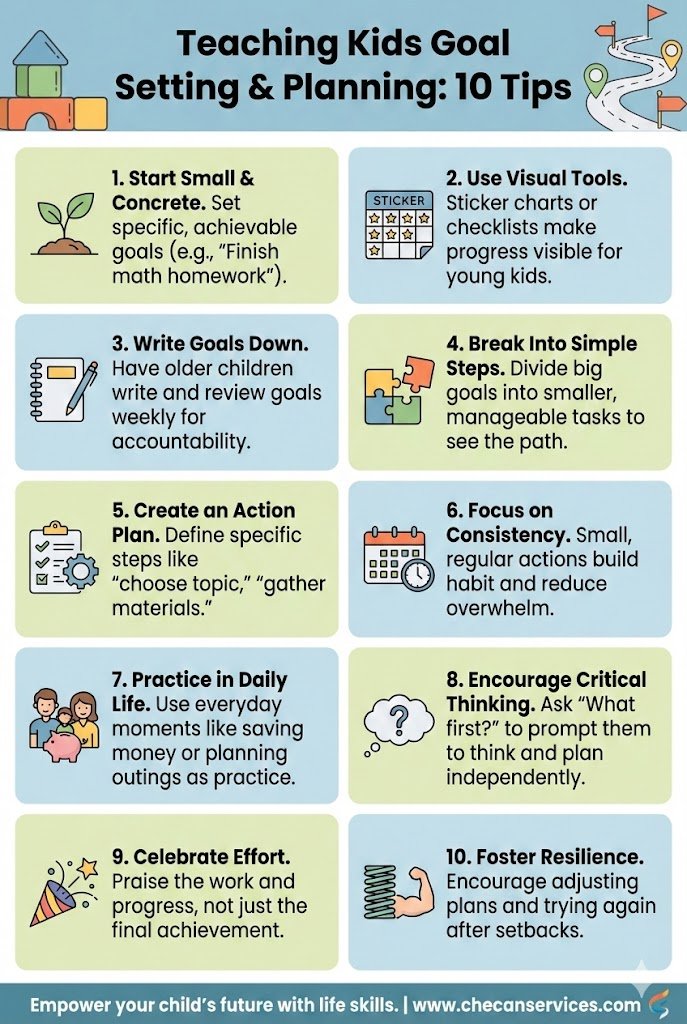
Teaching goal setting and planning skills to children is one of the most practical gifts we can give them. These skills don’t just help with homework or chores; they shape how children approach challenges, manage time, and believe in their own abilities. When kids learn how to set goals and plan steps to achieve them, they begin to see effort as something that leads to results.
At its core, goal setting helps children answer a simple question: What do I want to achieve? Planning then shows them how to get there. Together, these skills build confidence, resilience, and independence.
Start Small and Make Goals Concrete
Children learn best when goals feel achievable. Instead of saying, “Do better in school,” help them set a clear and specific goal like, “Finish my math homework on time three days this week.” Concrete goals are easier to understand and far less intimidating.
For younger children, visual tools work wonders. A sticker chart for reading each night or a checklist for getting ready in the morning can turn abstract ideas into something they can see and track. Older children can benefit from writing goals down and reviewing them weekly, which introduces accountability in a gentle way.
Break Goals into Simple Steps
One of the biggest challenges for children is seeing the path from start to finish. This is where planning comes in. Help them break a goal into smaller, manageable steps. For example, if a child wants to complete a school project, the steps might include choosing a topic, gathering materials, creating an outline, and working a little each day.
This process teaches children that big goals don’t require giant leaps—just consistent, small actions. It also reduces overwhelm, which is often the reason kids give up early.
Use Everyday Life as Practice
Goal setting doesn’t have to feel like a lesson. Everyday moments are perfect teaching opportunities. Planning a family outing, saving allowance money for a toy, or preparing for a sports game all involve setting goals and making plans.
When children see these skills used in real life, they understand their value. Asking questions like, “What do we need to do first?” or “How can we make sure we’re ready?” encourages critical thinking without pressure.
Celebrate Effort, Not Just Results
One of the most important lessons in goal setting is understanding that effort matters. Celebrate progress, even if the goal isn’t fully reached. This reinforces the idea that learning and growth happen along the way, not just at the finish line.
When children feel supported rather than judged, they’re more likely to try again, adjust their plans, and develop resilience.
Key Takeaways for Parents and Educators
Teaching goal setting and planning skills helps children develop focus, confidence, and responsibility. By starting small, breaking goals into steps, and practicing in everyday situations, children learn that they have control over their progress. These skills don’t just support academic success—they prepare children for lifelong learning and problem-solving.
If you’re looking for thoughtful resources that explore personal growth, self-awareness, and intentional living, you may enjoy the ebooks by Louise Blount available on Apple Books. They offer gentle insights that align beautifully with teaching children how to think ahead and grow with purpose.