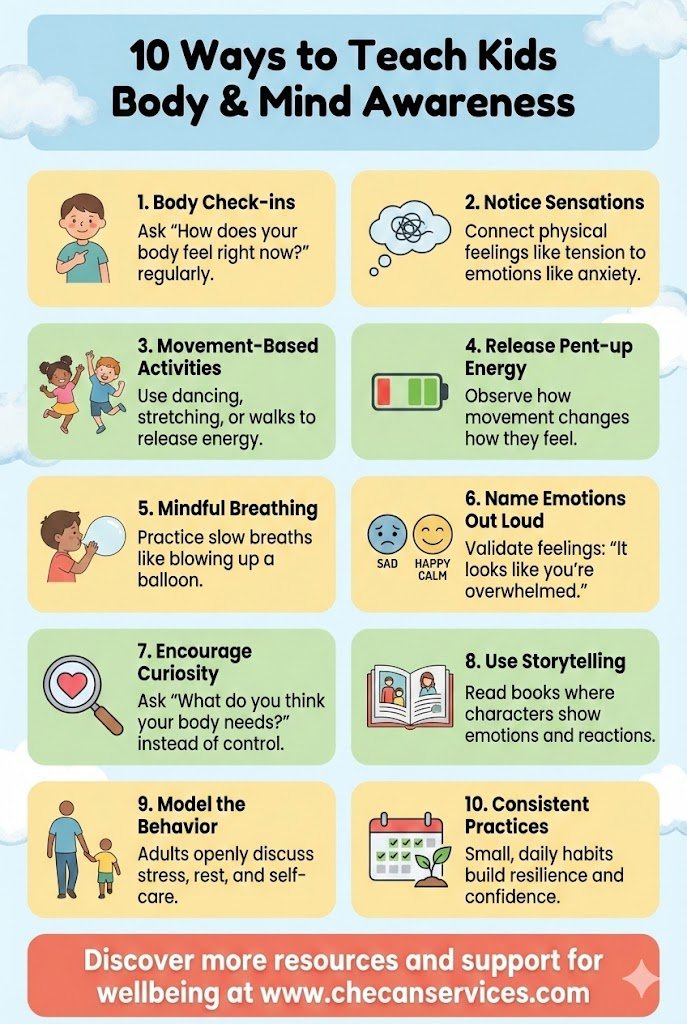
Teaching kids body awareness and mental wellbeing isn’t about turning them into mini yogis or therapists. It’s about helping them understand what their bodies and minds are telling them—and giving them the language and confidence to respond with care. In a world where children face increasing academic pressure, screen time, and emotional overload, these skills are no longer optional. They’re essential.
Why Body Awareness Matters for Kids
Body awareness is a child’s ability to notice physical sensations—like hunger, tension, excitement, or fatigue—and understand what they mean. When kids can tune into their bodies, they’re better equipped to regulate emotions, manage stress, and communicate needs.
For example, a child who recognizes that a tight chest and fast breathing mean they’re anxious can learn to pause, take a few deep breaths, and ask for help. Without that awareness, those same sensations might come out as frustration, withdrawal, or a meltdown.
Mental wellbeing grows naturally from this foundation. When children feel safe in their bodies, they feel safer in their minds too.
Simple Ways to Build Body Awareness at Home and School
You don’t need fancy tools or long lessons. Small, consistent practices make the biggest difference.
One easy starting point is body check-ins. Ask questions like, “How does your body feel right now?” or “Where do you feel calm or tense today?” This helps kids connect feelings with physical sensations.
Movement-based activities are another powerful tool. Stretching, dancing, or even a quick walk allows children to release pent-up energy and notice how movement changes how they feel. Mindful breathing—such as pretending to slowly blow up a balloon—can also help kids calm their nervous systems in a fun, accessible way.
Storytelling works well too. Reading stories where characters experience emotions and physical reactions helps children see that these experiences are normal and manageable.
Supporting Mental Wellbeing Through Everyday Conversations
Mental wellbeing doesn’t have to be a “serious talk.” It thrives in everyday moments. Naming emotions out loud—“It looks like you’re feeling overwhelmed”—gives kids permission to feel without judgment.
Encourage curiosity instead of control. Rather than saying, “Stop crying,” try, “What do you think your body needs right now?” This approach teaches self-trust and emotional literacy, skills they’ll carry into adulthood.
Most importantly, model the behavior. When adults talk openly about stress, rest, and self-care, kids learn that wellbeing is a lifelong practice, not a quick fix.
Key Takeaways for Parents and Educators
Teaching body awareness and mental wellbeing is about consistency, not perfection. Small practices repeated daily can help children build resilience, emotional intelligence, and confidence. These skills support better learning, healthier relationships, and a stronger sense of self.
Looking Ahead
As conversations around mental health continue to grow, empowering kids early sets the stage for a more compassionate and self-aware generation. The tools you introduce today—breathing, movement, emotional language—can shape how children navigate challenges tomorrow.
If you’re looking to deepen your understanding and explore these themes further through thoughtful, reflective reading, consider checking out the ebooks by Louise Blount available on Apple Books. They’re a gentle nudge toward mindful living—for adults and the children they support.