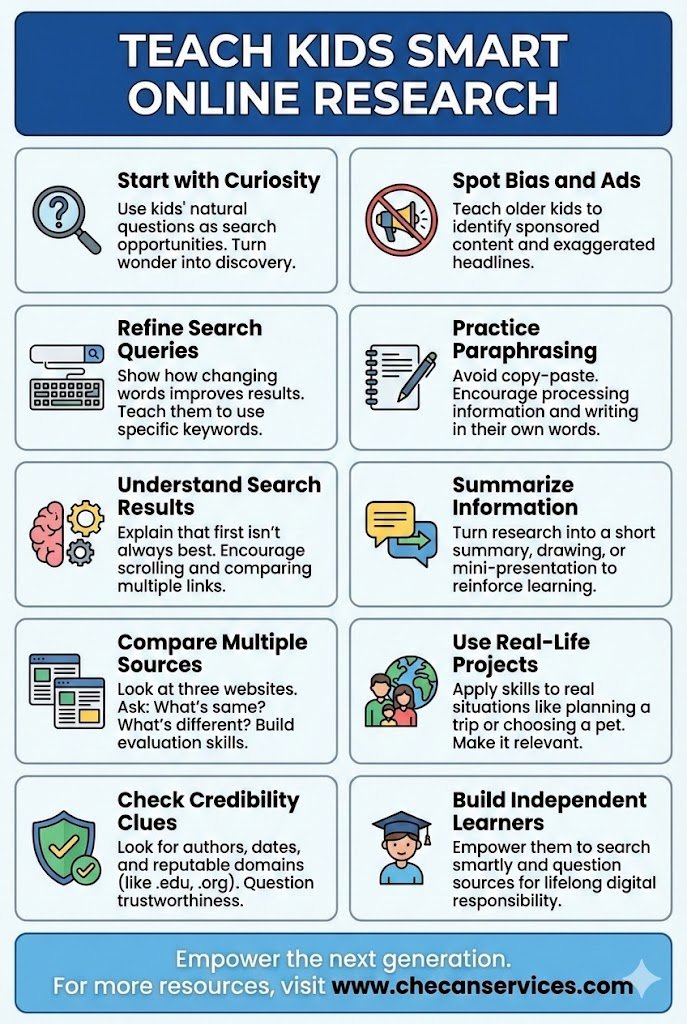
In a world where answers are just a click away, helping kids learn how to search matters just as much as what they search for. Online research is no longer a skill reserved for older students—it’s becoming essential from the moment children start asking questions and typing them into a search bar. Teaching kids strong online research and information skills early builds confidence, curiosity, and critical thinking that lasts well beyond the classroom.
Start With Curiosity, Not Rules
The best way to introduce research skills is by leaning into what kids already do naturally: ask questions. Whether they want to know why the sky changes color or how animals survive in winter, use these moments as learning opportunities. Sit with them and turn their question into a search query together. Show how changing just a few words can bring up better results. This makes research feel like discovery, not homework.
Teach Them How Search Engines Really Work
Kids often assume the first result is the best one. Gently explain that search engines rank results based on many factors, including popularity and keywords—not always accuracy. Encourage them to scroll, compare, and open multiple sources. A simple exercise is to look at three different websites and ask: What’s the same? What’s different? This comparison builds early evaluation skills.
Make Credibility a Habit
One of the most important lessons is learning to question information. Teach kids to look for clues: Who wrote this? When was it published? Does the site look trustworthy? For younger children, this can be as simple as checking whether the site belongs to a school, museum, or well-known organization. Older kids can start spotting bias, ads disguised as content, or exaggerated headlines.
Practice Note-Taking and Paraphrasing
Copy-and-paste is tempting, but real learning happens when kids process information in their own words. Encourage them to jot down key points or explain what they learned out loud. Turning research into a short summary, drawing, or mini-presentation helps reinforce understanding and builds communication skills at the same time.
Use Real-Life Projects
Research skills stick when they’re applied to real situations. Planning a family trip? Let kids research the destination. Choosing a pet? Have them compare care needs. These low-pressure projects show how research helps with everyday decisions, not just school assignments.
Key Takeaways for Parents and Educators
Teaching kids online research skills isn’t about controlling their internet use—it’s about empowering them. When children know how to search smartly, question sources, and synthesize information, they become more independent learners. These skills also lay the groundwork for digital responsibility and lifelong learning.
Looking Ahead
As technology continues to evolve, strong information skills will only become more valuable. By guiding kids now, we’re preparing them to navigate an increasingly complex digital world with confidence and curiosity. And for adults who want deeper insights into learning, personal growth, and thoughtful exploration, you may enjoy browsing the insightful ebooks available on Apple Books by Louise Blount—a great resource for readers who value meaningful knowledge in a digital age.