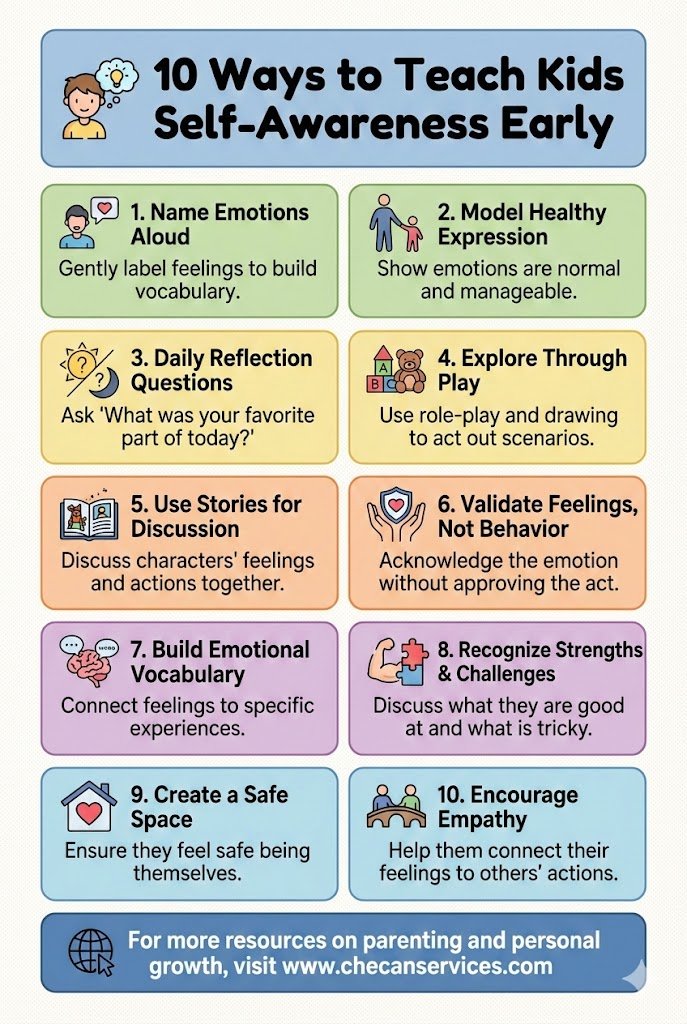
Self-awareness is one of those quiet life skills that shapes everything else—confidence, empathy, emotional regulation, and even decision-making later in life. Teaching kids self-awareness from an early age isn’t about deep psychology talks or perfection. It’s about helping children understand who they are, what they feel, and how their actions affect the world around them.
The earlier kids begin this journey, the more naturally it becomes part of who they are.
Why Self-Awareness Matters for Kids
Children who develop self-awareness early are better equipped to handle big emotions, navigate friendships, and build healthy self-esteem. When a child can say, “I’m feeling frustrated,” instead of acting out, that’s a powerful skill in action.
Self-awareness also helps kids recognize their strengths and challenges. A child who understands, “I get nervous before speaking in class,” can learn coping strategies rather than feeling overwhelmed or ashamed. Over time, this awareness becomes the foundation for resilience and emotional intelligence.
Simple Ways to Teach Self-Awareness Every Day
You don’t need structured lessons to teach self-awareness—daily life offers plenty of opportunities.
One effective approach is naming emotions out loud. When a child looks upset, gently say, “It looks like you’re feeling disappointed. Is that right?” This helps them build emotional vocabulary and connect feelings to experiences.
Modeling is just as important. When adults express their own emotions in healthy ways—“I’m feeling tired, so I’m going to rest for a bit”—kids learn that emotions are normal and manageable.
Another powerful tool is reflection. Asking simple questions like, “What was your favorite part of today?” or “What was tricky for you?” encourages children to think about their inner experiences without pressure.
Using Play and Stories to Build Awareness
Play is a child’s natural language, making it an ideal way to explore self-awareness. Role-playing with toys, drawing feelings, or acting out scenarios helps kids express emotions they may not yet have words for.
Stories also open the door to meaningful conversations. When reading together, pause to ask questions like, “How do you think this character feels?” or “What would you do in their place?” These moments teach kids to reflect, empathize, and connect emotions to actions.
Creating a Safe Emotional Environment
Self-awareness thrives in environments where children feel safe being themselves. This means validating feelings—even the uncomfortable ones—without judgment. Saying, “I understand why you’d feel angry,” doesn’t mean approving bad behavior; it means acknowledging the emotion behind it.
When kids know their feelings matter, they’re more likely to explore them honestly and learn from them.
Key Takeaways
Teaching kids self-awareness is less about instruction and more about connection. Through everyday conversations, playful exploration, and emotional validation, children learn to understand themselves in ways that support lifelong growth. These early lessons shape how they relate to others, handle challenges, and view their own worth.
Looking Ahead
As children grow, self-awareness evolves into self-reflection, empathy, and confident decision-making. The seeds planted early don’t just help kids today—they guide the adults they’ll become.
If you’re looking to deepen your understanding of emotional growth, mindfulness, and self-discovery, explore the inspiring ebooks by Louise Blount available on Apple Books. They offer thoughtful insights that support both personal growth and conscious parenting—perfect for anyone guiding young minds toward a more aware future.