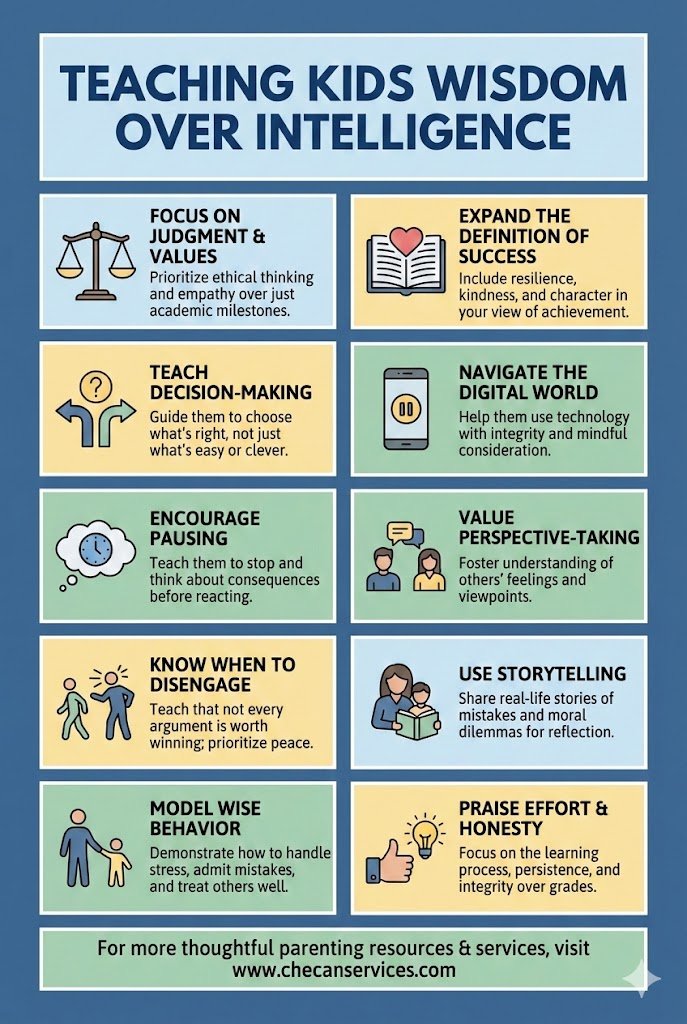
In a world obsessed with grades, test scores, and academic milestones, it’s easy to assume that raising “smart” kids is the ultimate goal. Intelligence, after all, opens doors. But wisdom? Wisdom helps children know which doors are worth opening—and which ones to walk away from.
Teaching kids wisdom instead of just intelligence doesn’t mean abandoning academics. It means expanding the definition of success to include judgment, empathy, resilience, and values. These are the qualities that shape how children handle friendships, failure, money, technology, and eventually leadership.
Think about it this way: intelligence helps a child solve a math problem, but wisdom helps them decide whether to cheat when the answer key is within reach.
Why Wisdom Matters More Than Ever
Today’s children are growing up in a fast-moving, always-connected world. Information is abundant, but guidance is scarce. Kids can Google almost anything, yet still struggle with decisions about kindness, integrity, and self-worth.
Wisdom fills that gap. It helps children pause before reacting, consider consequences, and understand perspectives beyond their own. A wise child doesn’t just ask, “Is this correct?” but also, “Is this right?”
For example, a highly intelligent child may know how to win an argument. A wise child knows when an argument isn’t worth winning.
How Wisdom Is Taught (Hint: Not Through Lectures)
Wisdom is rarely taught directly. It’s absorbed through experience, conversation, and observation.
One of the most powerful tools is storytelling. When parents and educators share real-life stories—about mistakes, tough choices, or moral dilemmas—kids begin to see how values play out in the real world. Asking questions like, “What would you do differently?” or “How do you think that made them feel?” encourages reflection.
Another key is modeling behavior. Children watch far more than they listen. How adults handle stress, treat others, admit mistakes, and make decisions becomes a living curriculum. If we want wise children, we must be willing to practice wisdom ourselves.
Balancing Intelligence and Wisdom
Wisdom doesn’t replace intelligence; it completes it. Encourage curiosity and academic excellence, but pair them with emotional awareness and ethical thinking.
For instance, praise effort and honesty, not just results. When a child fails a test, focus less on the grade and more on what they learned about preparation, persistence, and self-belief. These lessons last far longer than memorized facts.
Over time, children begin to internalize the idea that success isn’t just about being the smartest person in the room—it’s about being thoughtful, grounded, and humane.
Key Takeaways
Raising wise children means valuing character alongside capability. It means helping kids think deeply, act compassionately, and make choices they can stand by. Intelligence may help them navigate the world, but wisdom helps them live well within it.
If you enjoy exploring thoughtful approaches to growth, values, and self-development, you may appreciate the reflective ebooks by Louise Blount available on Apple Books. Discover insights that gently guide readers toward deeper understanding and intentional living by exploring these inspiring ebooks on Apple Books.