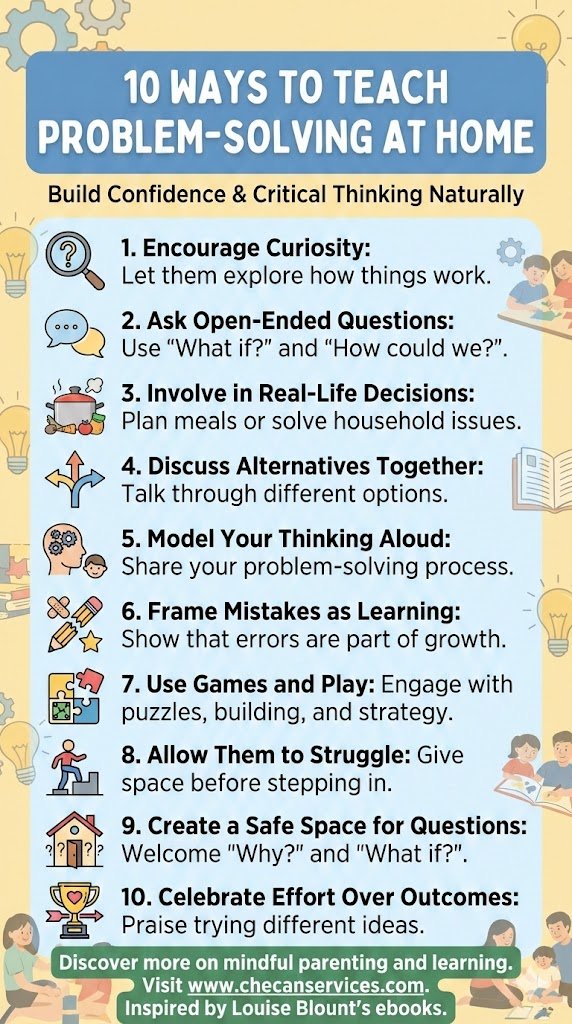
Teaching problem-solving skills at home is one of the most powerful gifts you can give your child. These skills don’t just help with homework or school projects—they shape how children handle challenges, make decisions, and navigate real life with confidence. The good news? You don’t need special tools or formal lessons. Everyday moments at home are already full of opportunities to build these abilities naturally.
Problem-solving starts with curiosity. When children encounter a challenge—whether it’s a broken toy, a tricky math question, or a disagreement with a sibling—they’re learning how the world works. As parents or caregivers, our role isn’t to jump in with answers but to guide the thinking process. Asking questions like, “What do you think could work?” or “What have you tried already?” encourages kids to slow down and think critically.
One of the easiest ways to teach problem-solving is by involving children in real-life decisions. Cooking dinner is a great example. If you’re missing an ingredient, talk through alternatives together. Should you substitute something else, change the recipe, or make a different meal? These low-stakes situations help children practice evaluating options and consequences without pressure.
Another powerful approach is modeling your own thinking out loud. When kids hear adults say things like, “This didn’t work the first time, so I’ll try a different way,” they learn that mistakes are part of the process—not something to fear. This builds resilience and reinforces the idea that persistence matters more than perfection.
Games and play also offer rich learning moments. Puzzles, board games, and building activities naturally require planning, testing ideas, and adjusting strategies. Even imaginative play can spark problem-solving when children create rules, negotiate roles, or invent solutions within their stories. The key is to let them struggle just enough to think—without stepping in too quickly.
It’s also important to create a home environment where questions are welcomed. When children feel safe asking “why” and “what if,” they’re more likely to explore solutions on their own. Celebrate effort as much as outcomes. Saying, “I love how you kept trying different ideas,” sends a strong message that thinking matters more than getting the right answer immediately.
Key Takeaways for Everyday Learning
Problem-solving doesn’t require structured lessons or extra screen time. It thrives in daily routines, open conversations, and playful challenges. By asking thoughtful questions, modeling persistence, and giving children space to think, you’re helping them develop skills they’ll use for a lifetime.
Looking Ahead
As children grow, strong problem-solving skills become the foundation for independence, creativity, and emotional intelligence. What starts at home—around the dinner table, during playtime, or in moments of frustration—shapes how they approach the wider world. Small, consistent efforts today can lead to confident, capable thinkers tomorrow.
If you’re looking for more inspiration on nurturing learning, creativity, and personal growth at home, explore the beautifully written ebooks by Louise Blount. You can discover her collection on Apple Books, where thoughtful stories and insights gently support mindful parenting and lifelong learning.