Setbacks are rarely welcome, but they are almost always instructive. Whether it’s a missed promotion, a business idea that didn’t take off, or a personal goal that slipped through your fingers, setbacks have a way of stopping us in our tracks. The real difference between people who stall and people who grow isn’t the absence of failure—it’s how they respond to it.
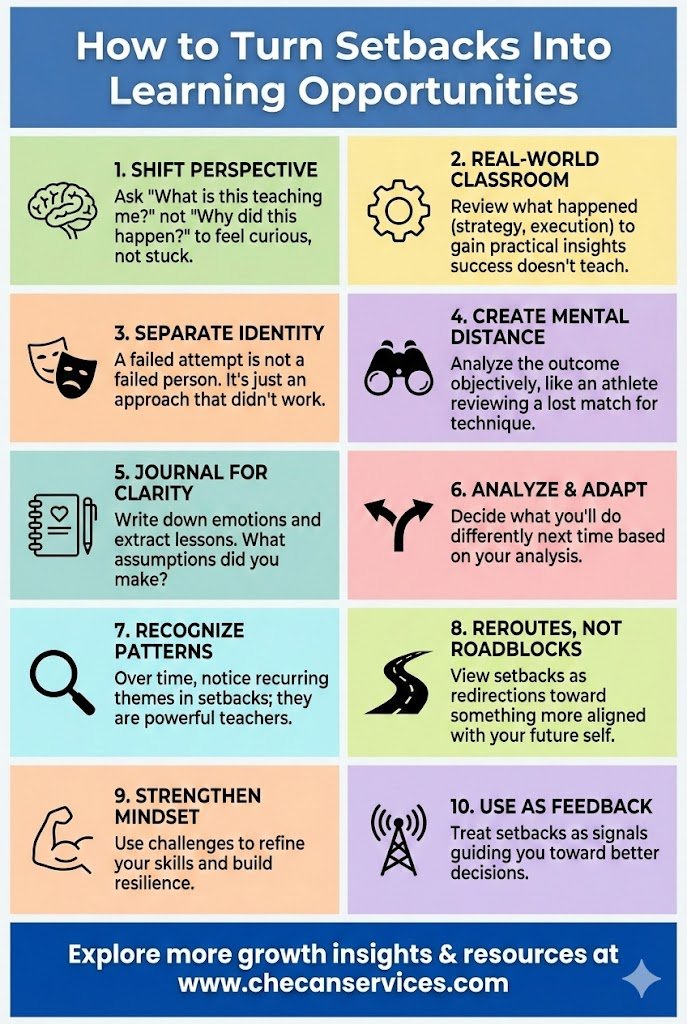
At its core, turning setbacks into learning opportunities starts with a shift in perspective. Instead of asking, “Why did this happen to me?” a more useful question is, “What is this trying to teach me?” That single reframing moves you from feeling stuck to feeling curious, and curiosity opens the door to growth.
Consider someone who launches a side business that doesn’t gain traction. The initial reaction might be disappointment or self-doubt. But when they step back and review what happened—pricing, audience fit, marketing strategy—they gain insights they wouldn’t have learned from immediate success. The setback becomes a real-world classroom, offering lessons far more practical than theory ever could.
Another powerful step is separating your identity from the outcome. A failed attempt does not mean you are a failure. It means one approach didn’t work. When you create that mental distance, you can analyze what happened more objectively. Athletes do this all the time: a lost match is reviewed for technique and strategy, not as a verdict on personal worth. You can apply the same approach to your career, relationships, and personal goals.
Writing things down can also turn pain into progress. Journaling about a setback helps clarify emotions and extract lessons. What assumptions did you make? What would you do differently next time? Over time, this habit builds self-awareness and resilience. You start to notice patterns, and patterns are incredibly powerful teachers.
It’s also worth remembering that setbacks often prepare you for opportunities you can’t yet see. Many people look back and realize that a rejection or failure redirected them toward something more aligned with who they became later. In that sense, setbacks aren’t roadblocks; they’re reroutes. They push you to refine your skills, strengthen your mindset, and redefine what success actually means to you.
Perhaps the most encouraging part is this: once you learn how to learn from setbacks, you’re no longer afraid of them. They lose their power to paralyze you. Instead, they become signals—feedback guiding you toward better decisions and stronger versions of yourself.
Key Takeaways to Carry Forward
Setbacks are inevitable, but stagnation is optional. When you treat challenges as teachers, you build resilience, adaptability, and confidence. Each obstacle adds another layer of experience that success alone can’t provide. Over time, you don’t just recover faster—you grow wiser with every stumble.
If you enjoy reflective, growth-oriented insights like these and want to explore them more deeply, you might enjoy the thoughtful ebooks available on Apple Books by Louise Blount. Discover them through this curated collection on Apple Books and continue turning everyday challenges into meaningful progress.