If you’ve ever watched your child line up toys with laser focus or ask why for the tenth time in a row, you’ve probably wondered: Am I parenting the right way? The debate between Montessori and traditional parenting often centers on one big question—which approach raises smarter kids? The answer isn’t as black and white as social media debates might suggest, but it is fascinating.
Let’s unpack both styles, look at how “smart” is defined, and explore what the future of parenting might look like.
Understanding Montessori Parenting
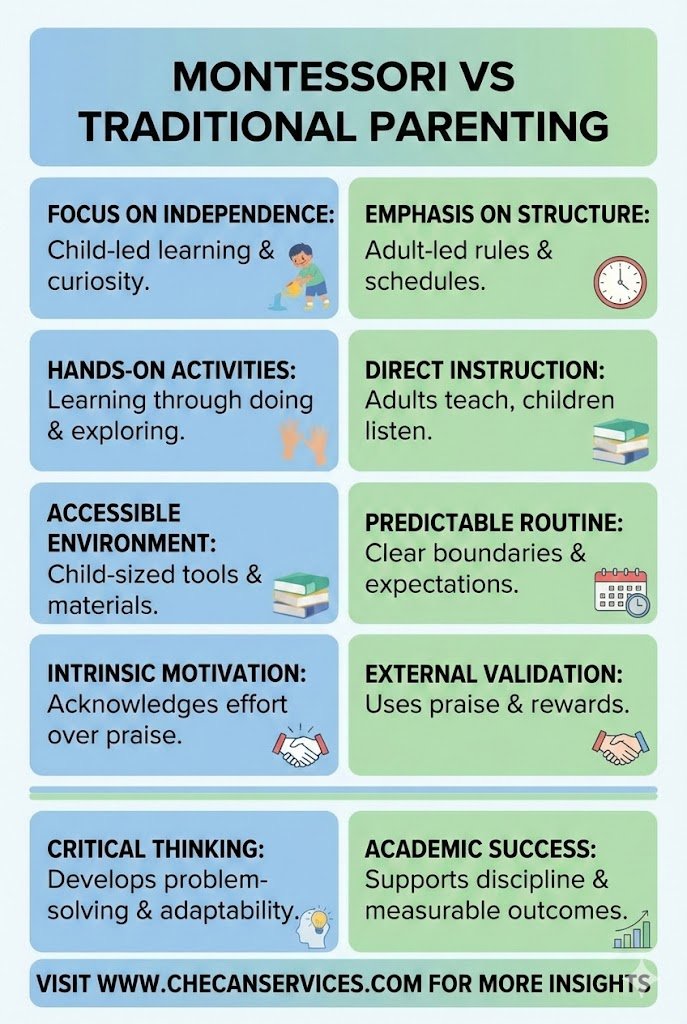
Montessori parenting is built around independence, curiosity, and respect for the child as an individual. Instead of directing every activity, parents prepare an environment where kids can choose tasks, solve problems, and learn at their own pace.
For example, a Montessori-style home might have low shelves with accessible materials, child-sized tools, and real-life activities like pouring water or preparing snacks. The idea is simple: learning happens through doing. Children develop critical thinking, concentration, and intrinsic motivation—skills often linked with long-term cognitive success.
Rather than rewarding kids with praise for every action, Montessori parents tend to acknowledge effort. This subtle shift helps children build internal confidence instead of relying on external validation.
Traditional Parenting Explained
Traditional parenting, on the other hand, is more structured and adult-led. Parents set clear rules, schedules, and expectations. Learning often follows a top-down model: adults teach, children listen.
This approach can be incredibly effective for building discipline, routine, and respect for authority. Think scheduled homework time, clear boundaries around screen use, and direct instruction. Many children thrive in this predictable environment, especially those who feel secure with guidance and structure.
Traditional parenting can also support academic success, particularly in systems that value standardized testing and measurable outcomes.
What Does “Smarter” Really Mean?
Here’s where things get interesting. If “smarter” means early reading, math skills, or strong test performance, traditional parenting often shows quicker results. But if intelligence includes creativity, emotional regulation, adaptability, and problem-solving, Montessori parenting shines.
Modern research increasingly supports a broader definition of intelligence—one that includes emotional intelligence, executive function, and lifelong learning skills. From that perspective, Montessori’s emphasis on independence and curiosity aligns well with the demands of a fast-changing world.
Key Takeaways
- Montessori parenting nurtures independence, intrinsic motivation, and critical thinking
- Traditional parenting provides structure, discipline, and clear expectations
- “Smart” kids aren’t just good at tests—they’re adaptable, curious, and emotionally aware
- Many families successfully blend both approaches
Looking Ahead
The future of parenting may not be Montessori or traditional—but a thoughtful mix of both. As education and careers evolve, children will need structure and creativity, guidance and autonomy. The smartest approach may be the one that adapts to your child’s unique personality while staying open to growth.
If you enjoy exploring thoughtful perspectives on parenting, personal growth, and modern life, you may love the insightful ebooks by Louise Blount. You can discover and explore them on Apple Books—a great place to deepen your understanding and find inspiration for your own parenting journey.