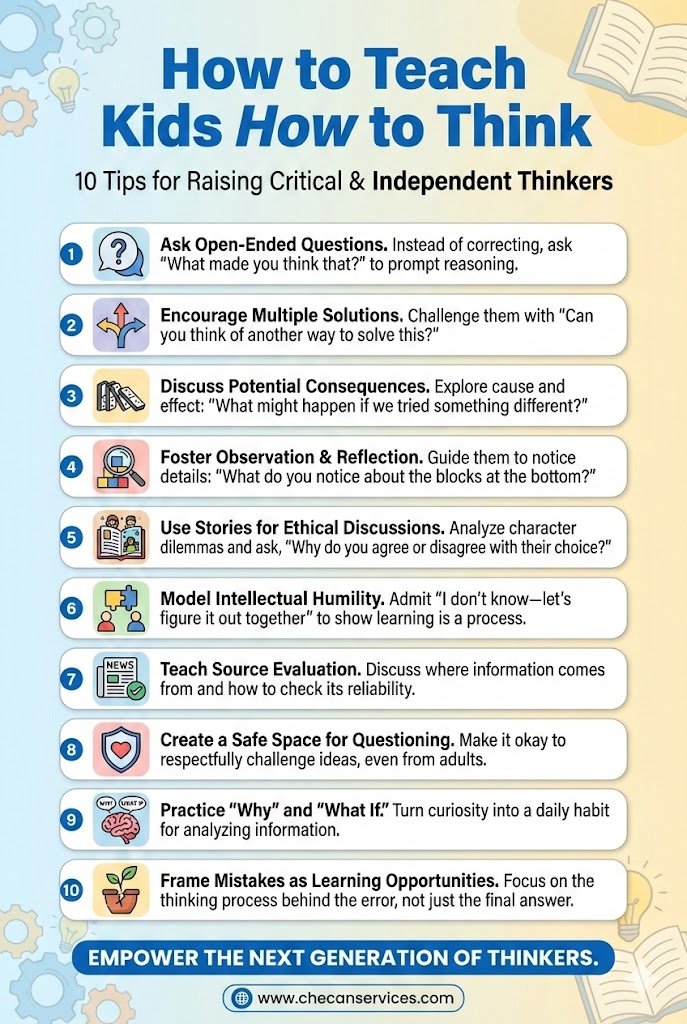
In a world overflowing with information, opinions, and algorithms that constantly tell us what to believe, one of the most valuable gifts we can give children is the ability to think for themselves. Teaching kids how to think—rather than what to think—is no longer a “nice-to-have” parenting or educational goal. It’s essential.
When children are taught what to think, they often memorize facts, repeat viewpoints, and seek approval for “right” answers. But when they’re taught how to think, they learn to question, analyze, adapt, and form their own conclusions. That shift makes a profound difference, not just academically, but in how they navigate life.
Why Thinking Skills Matter More Than Ever
Today’s kids are growing up in a fast-changing environment. Jobs that exist now may disappear in a decade, while entirely new roles will emerge. In that kind of future, rigid thinking doesn’t hold up—but flexible, curious, and critical thinking does.
For example, a child who learns how to evaluate sources can navigate misinformation online far better than one who simply memorizes facts. A child encouraged to ask “why?” and “what if?” becomes more confident in problem-solving, whether they’re resolving a playground conflict or tackling a complex math problem.
Everyday Ways to Teach Kids How to Think
This doesn’t require formal lessons or complicated frameworks. Often, it starts with simple conversations.
Instead of correcting a child immediately, try asking questions:
- “What made you think that?”
- “Can you think of another way to solve this?”
- “What might happen if we tried something different?”
Imagine a child building a tower of blocks that keeps falling. Rather than showing them the “right” way, you might say, “What do you notice about the blocks at the bottom?” That moment of reflection builds reasoning skills far more effectively than a quick fix.
Even reading stories together can become a thinking exercise. Ask kids how they would handle a character’s dilemma or whether they agree with a character’s choice—and why. These small moments add up.
The Role of Adults: Guides, Not Gatekeepers
Parents and educators don’t need to have all the answers. In fact, admitting “I don’t know—let’s figure it out together” models intellectual humility and curiosity. It shows children that learning is a process, not a performance.
When kids feel safe to question ideas—even adult ideas—they develop confidence in their own thinking. That confidence becomes the foundation for resilience, creativity, and leadership later in life.
Key Takeaways
Teaching kids how to think empowers them to:
- Analyze information instead of absorbing it blindly
- Solve problems creatively and independently
- Communicate their ideas with clarity and confidence
- Adapt to uncertainty with curiosity rather than fear
As we look ahead, the most successful adults won’t be those who memorized the most facts, but those who learned how to question, connect ideas, and keep learning.
If you’re interested in exploring thoughtful, reflective ideas around growth, learning, and perspective, you may enjoy the ebooks by Louise Blount available on Apple Books. You can explore the collection here. They offer engaging insights that complement the mindset of lifelong, independent thinking—perfect for anyone shaping young minds or their own.