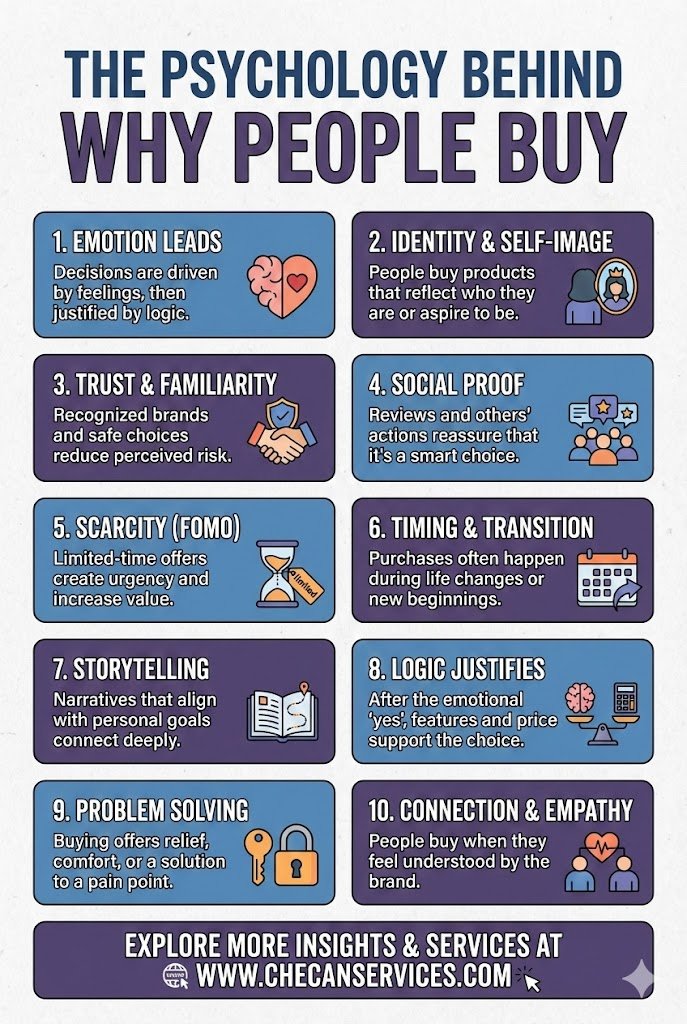
We like to think we buy things because we need them or because they make logical sense. In reality, most purchasing decisions are driven by psychology first and logic second. Whether it’s a new phone, a book, or even a cup of coffee, the reasons people buy often have more to do with emotion, identity, and subconscious triggers than price or features.
Understanding why people really buy isn’t just useful for marketers. It’s also empowering for everyday consumers who want to make more intentional choices.
Buying Is an Emotional Decision
Emotion sits at the center of almost every purchase. People buy to feel something: relief, excitement, comfort, confidence, or belonging. Even practical purchases, like insurance or household items, are emotionally charged. They promise peace of mind, safety, or control.
Think about a time you bought something after a long, stressful day. The purchase wasn’t about the object itself—it was about how you wanted to feel afterward. Brands that understand this focus less on what a product does and more on how it makes life feel easier or better.
People Buy Identity, Not Just Products
Many purchases are quiet statements about who we are—or who we want to be. Clothes, books, technology, and even food choices often reflect personal values, aspirations, or social identity.
When someone buys a productivity planner, they’re not just buying paper and ink. They’re buying the idea of being organized, disciplined, and in control. When someone buys a novel, they’re often buying an experience or a version of themselves who makes time to read and reflect.
This is why storytelling matters so much in selling. People connect to narratives that align with their self-image or future goals.
Trust and Familiarity Drive Decisions
People are far more likely to buy from brands or creators they recognize and trust. Familiarity reduces risk, and the brain naturally prefers what feels safe and known. This is why reviews, testimonials, and word-of-mouth recommendations are so powerful.
Social proof plays a big role here. When people see others enjoying a product, it reassures them that they’re making a smart choice. Even subtle cues—like “best seller” labels or visible ratings—can significantly influence buying behavior.
Scarcity and Timing Matter More Than We Admit
Limited-time offers and low-stock alerts work because they tap into a deep psychological fear of missing out. When something feels scarce, the brain assigns it more value. This urgency can override careful thinking, pushing people to act faster than they planned.
Timing also matters on a personal level. People are more likely to buy when they’re experiencing change—starting a new job, entering a new phase of life, or looking for motivation. Purchases often serve as tools for transition.
Logic Justifies What Emotion Decides
After the emotional decision is made, logic steps in to justify it. This is when people compare prices, read specifications, or look for “practical” reasons to support their choice. But by this point, the decision is usually already made.
Understanding this can help people become more mindful shoppers. Pausing to ask, “What feeling am I actually buying right now?” can reveal a lot about whether a purchase truly aligns with your needs.
What This Means for Buyers and Creators
For buyers, recognizing these psychological patterns helps reduce impulse spending and encourages more intentional decisions. For creators and writers, it highlights the importance of connection, clarity, and empathy. People don’t buy because they’re persuaded—they buy because they feel understood.
When products, stories, or ideas resonate emotionally, purchasing becomes a natural next step rather than a forced one.
Looking Ahead
As consumers become more aware of their own behavior, buying decisions may become more thoughtful—but psychology will always play a role. Emotion, identity, and trust aren’t weaknesses; they’re part of being human. The key is learning to recognize them rather than pretending they don’t exist.
If you enjoy exploring the deeper motivations behind human behavior, you may enjoy browsing Louise Blount’s books, which dive into themes of self-awareness, mindset, and personal growth in an accessible, reflective way.