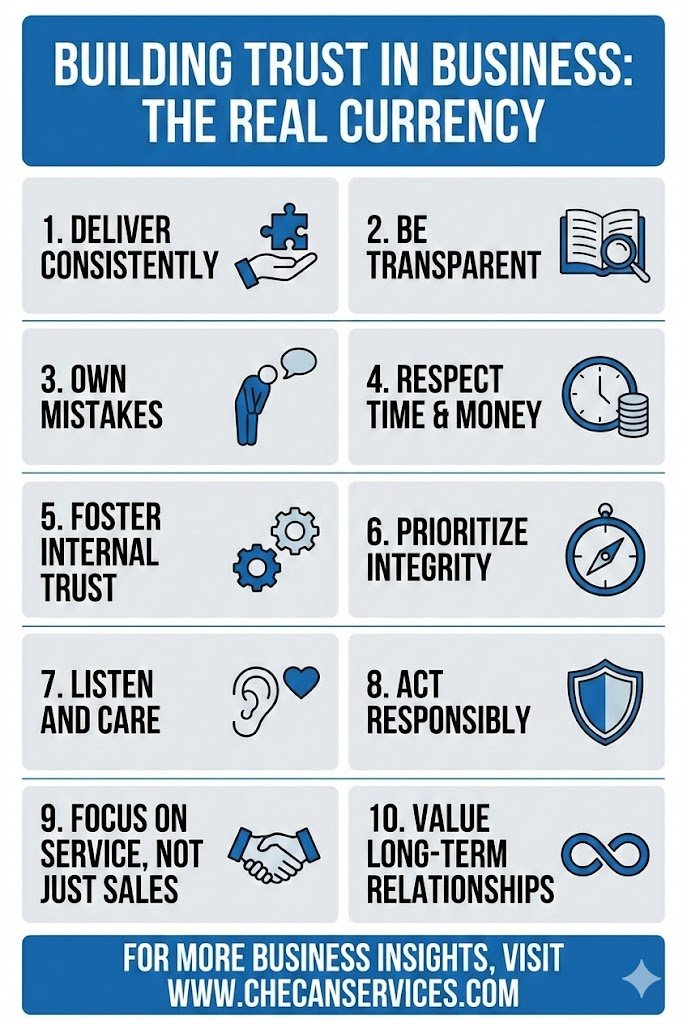
Money keeps a business running, but trust is what keeps it alive. You can have the best product, the smartest strategy, and the flashiest marketing—but without trust, everything eventually slows down or falls apart. In today’s business world, trust has quietly become the most valuable currency there is.
Customers, employees, partners, and even investors make decisions based on one question: Do I trust you? If the answer is yes, doors open. If it’s no, no amount of persuasion will fix it.
Why Trust Matters More Than Ever
We live in a time of endless choices. Customers can compare prices, read reviews, and switch brands in seconds. In this environment, trust becomes the deciding factor. People stay loyal to businesses they believe will treat them fairly, deliver consistently, and stand by their values.
Trust also spreads faster than ever. One positive experience can turn into a glowing recommendation. One broken promise can turn into a public warning. Businesses aren’t just competing on quality anymore—they’re competing on credibility.
Trust Is Built in Small Moments
Trust rarely comes from grand gestures. It’s built in small, repeated actions. Showing up on time. Delivering what was promised. Being honest when something goes wrong. Respecting people’s time and money.
Think about a business you trust. It’s probably not because they’re perfect. It’s because they’re reliable. You know what to expect, and when problems arise, they handle them transparently instead of hiding behind excuses.
Over time, those small moments stack up—and trust compounds.
The Cost of Broken Trust
Losing trust is expensive. Customers leave. Employees disengage. Partnerships weaken. Even internally, a lack of trust slows decision-making and creates tension.
What makes trust so fragile is how quickly it can disappear. One misleading claim, one ignored complaint, or one unethical shortcut can undo years of goodwill. Rebuilding trust takes far longer than earning it in the first place.
That’s why businesses that prioritize short-term gains over long-term integrity often struggle to sustain success.
Trust Inside the Business Matters Too
Trust isn’t only external. It’s just as important within a company. When employees trust leadership, they’re more engaged, creative, and willing to go the extra mile. They feel safe sharing ideas, raising concerns, and taking responsibility.
On the other hand, low-trust environments breed fear and silence. People focus on protecting themselves instead of doing their best work. Innovation slows, and turnover rises.
Strong internal trust creates a ripple effect that customers can feel.
How Trust Becomes a Competitive Advantage
Trust makes everything easier. Sales conversations are smoother. Negotiations take less time. Customers forgive honest mistakes. Employees stay longer.
In many industries, trust is the reason people choose one business over another—even when prices are higher. They’re not just buying a product or service; they’re buying peace of mind.
Businesses that understand this stop asking, “How do we sell more?” and start asking, “How do we serve better?” That shift changes everything.
Looking Ahead
As automation, AI, and digital platforms continue to grow, trust will matter even more. People want to know there’s a human core behind the brand—one that listens, cares, and acts responsibly.
The future of business belongs to those who treat trust not as a marketing tool, but as a core value. When trust leads, growth follows naturally.
For readers who enjoy thoughtful reflections on business, mindset, and personal growth, exploring Louise Blount’s books can offer deeper insights into building meaningful, sustainable success.