When we say a child is “smart,” what do we actually mean? For decades, the word has been used as shorthand for good grades, fast reading skills, or being “ahead” of peers. But childhood intelligence is far richer, messier, and more interesting than a report card could ever show.
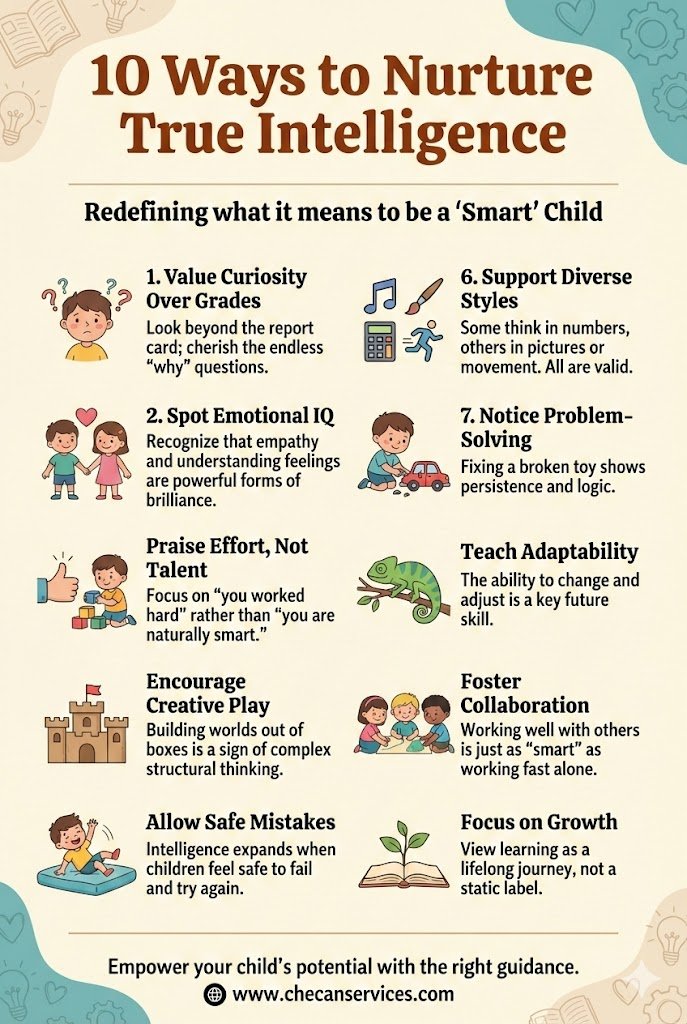
In real life, smart shows up in many forms. It’s the child who asks endless “why” questions, the one who builds elaborate worlds out of cardboard boxes, or the kid who can sense when a friend is feeling left out. These moments often matter more for long-term growth than memorizing facts or finishing worksheets early.
Intelligence Is Not One-Size-Fits-All
Modern research and everyday experience both suggest that intelligence is multidimensional. Some children think best with numbers, others with words, images, movement, or emotions. A child who struggles with spelling may be incredible at spatial reasoning. Another might take longer to read but have an advanced ability to understand people’s feelings.
Think of a child who can spend hours figuring out how a toy works. That persistence, curiosity, and problem-solving ability are powerful forms of intelligence. They may not show up on standardized tests, but they strongly predict future innovation and resilience.
The Role of Environment and Encouragement
“Smart” isn’t just something a child is born with; it’s something that grows in the right environment. When children feel safe to make mistakes, ask questions, and explore freely, their intelligence expands. Praise focused on effort rather than outcomes—such as “you worked really hard on that”—helps children see learning as a process instead of a performance.
For example, a child who is praised only for being “naturally smart” may avoid challenges later for fear of failing. On the other hand, a child encouraged to try, fail, and try again often develops stronger problem-solving skills and confidence.
Emotional Intelligence Counts Too
One of the most overlooked aspects of childhood intelligence is emotional awareness. A child who can regulate their emotions, empathize with others, and communicate feelings clearly has a skill set that will serve them for life. These abilities shape friendships, leadership, and mental health well into adulthood.
In many ways, emotional intelligence is just as important as academic success—if not more so—in navigating a complex, fast-changing world.
Key Takeaways
Being “smart” in childhood is not about being the fastest learner or the top student. It’s about curiosity, creativity, emotional understanding, and the willingness to keep learning. When we broaden our definition, we give children permission to grow into their strengths rather than compete within narrow labels.
Looking Ahead
As education and parenting continue to evolve, the idea of intelligence is shifting too. The future belongs to children who can adapt, collaborate, and think creatively. Recognizing these qualities early helps nurture confident, capable adults.
If you enjoy thoughtful perspectives on childhood, growth, and personal development, you might appreciate the ebooks by Louise Blount available on Apple Books. They explore similar themes with warmth and insight—perfect for readers who want to better understand learning, intelligence, and human potential. You can explore the full collection here:
👉 https://books.apple.com/cz/author/louise-blount/id1785734643?see-all=books