Have you ever walked into a store unsure about buying something, only to feel suddenly confident after a simple, calming explanation from the salesperson? That subtle shift—from hesitation to certainty—is often the result of the reassurance effect.
In today’s fast-moving, information-heavy world, customers are overwhelmed with options. The reassurance effect is becoming one of the most powerful tools in modern sales conversations. It doesn’t rely on pressure or persuasion. Instead, it builds trust, lowers anxiety, and makes buying feel safe.
Let’s explore how it works—and how it’s shaping the future of selling.
What Is the Reassurance Effect?
The reassurance effect happens when a salesperson reduces a buyer’s uncertainty through empathy, clarity, and confidence.
People don’t avoid purchases because they don’t want the product. They avoid purchases because they’re afraid of making the wrong decision. Will it work? Is it worth the money? What if something goes wrong?
Reassurance addresses those hidden fears directly.
It can be as simple as saying, “Most customers had the same concern at first,” or “If it’s not right for you, we offer easy returns.” Those words lower emotional resistance and create psychological safety.
And when customers feel safe, they move forward.
Why Reassurance Works So Well
Buying is emotional first and logical second. Even in business-to-business sales, decisions are influenced by perceived risk.
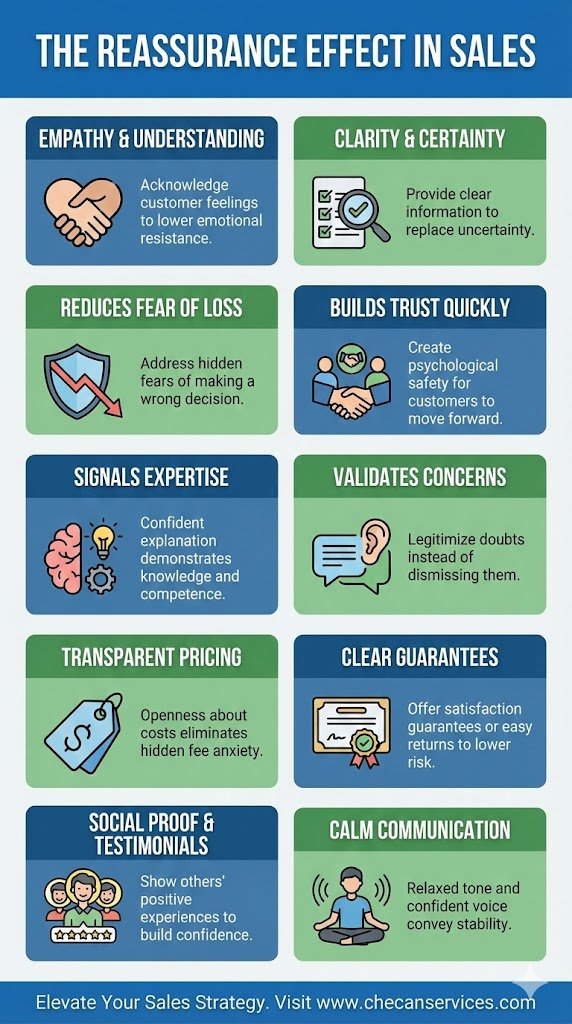
Reassurance works because it:
- Reduces fear of loss
- Builds trust quickly
- Signals expertise
- Validates the buyer’s concerns
- Creates emotional comfort
Think about booking a hotel online. You may compare prices, but what truly convinces you? Often it’s phrases like “Free cancellation,” “Verified reviews,” or “No hidden fees.” Those aren’t aggressive sales tactics—they’re reassurance triggers.
In face-to-face or virtual sales conversations, the same principle applies.
How the Reassurance Effect Shows Up in Real Conversations
Imagine someone considering a high-ticket coaching program. They’re interested, but they hesitate. Instead of pushing harder, the salesperson says:
“I completely understand—it’s an investment. Many of our clients felt the same way at first. That’s why we offer a 30-day satisfaction guarantee.”
Suddenly, the risk feels smaller.
Or consider a tech product demo. The buyer worries about implementation. The salesperson responds:
“Our onboarding team handles the full setup, and you’ll have a dedicated support manager for the first 90 days.”
That’s reassurance in action. It replaces uncertainty with clarity.
In the future, as AI and automation handle more transactional tasks, human reassurance will become even more valuable. The more digital the world becomes, the more people crave confidence and personal trust.
The Future of Reassurance in Sales
Sales conversations are evolving. Buyers now research extensively before speaking to anyone. By the time they enter a conversation, they’re not looking for information—they’re looking for certainty.
This means sales professionals must shift from persuaders to confidence-builders.
The reassurance effect will increasingly rely on:
- Transparent pricing
- Clear guarantees
- Social proof and testimonials
- Personal empathy
- Calm, confident communication
Even tone matters. A relaxed voice communicates stability. Rushed speech increases anxiety.
Forward-thinking sales teams are already training around emotional intelligence and active listening. The ability to recognize hesitation and respond with reassurance is becoming a competitive advantage.
How to Use the Reassurance Effect Effectively
You don’t need scripted lines. You need awareness.
First, listen carefully for signs of doubt. Hesitation, repeated questions, or silence often signal uncertainty.
Second, acknowledge the concern directly. Avoid dismissing it.
Third, provide specific reassurance—policies, data, examples, or guarantees.
Finally, pause. Let the reassurance settle.
Remember, reassurance is not manipulation. It must be truthful and aligned with your actual product or service. False reassurance destroys trust quickly.
What This Means for Modern Sellers
The reassurance effect is not about convincing someone to buy something they don’t need. It’s about helping them feel safe making a decision they already want to make.
In a world where trust is fragile and choices are endless, reassurance is becoming the silent driver of conversions.
As sales becomes more relationship-focused and less transactional, those who master reassurance will stand out. They will create conversations that feel supportive, not stressful.
And that shift—from pressure to confidence—may define the future of successful selling.
If you’re interested in exploring more insights about communication, persuasion, and human behavior, you might enjoy browsing Louise Blount’s books for deeper perspectives and practical guidance.