Have you ever walked into a store, asked a question, and felt like the salesperson was just waiting to pitch something? It’s uncomfortable. And in today’s world—whether online or offline—buyers are more sensitive to that feeling than ever.
Understanding why buyers want to feel understood isn’t just a soft skill. It’s the difference between a one-time transaction and long-term loyalty. As markets become more competitive and choices multiply, emotional connection is becoming a powerful buying trigger.
Let’s explore what’s really happening beneath the surface.
Buying Is Emotional First, Logical Second
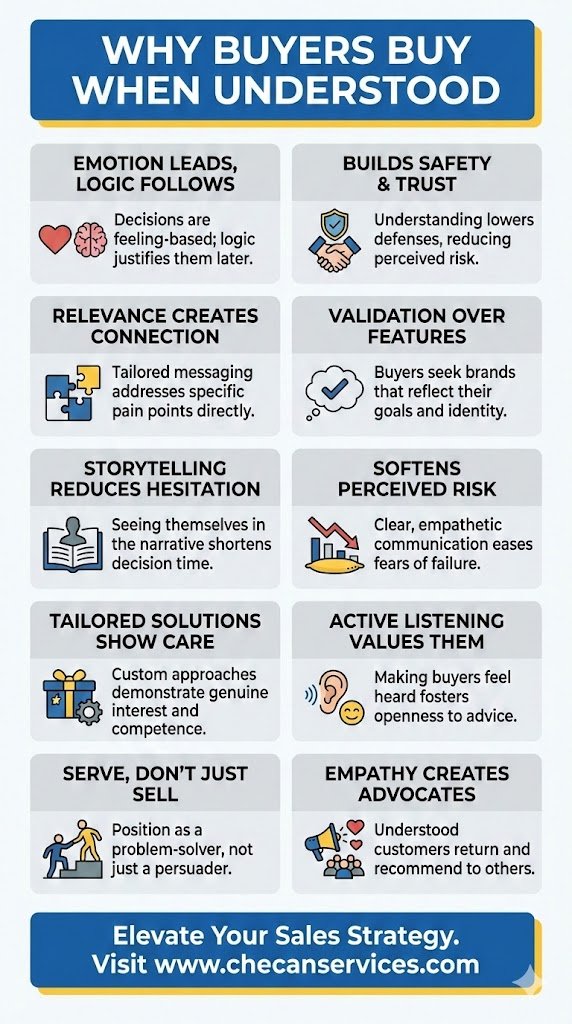
Most people believe they make rational decisions. In reality, emotion leads and logic justifies.
When buyers feel understood, their guard drops. They feel safe. Safety builds trust, and trust reduces the perceived risk of spending money. Whether someone is choosing software, a coaching program, or even a pair of shoes, they want reassurance that the product fits their specific situation.
For example, imagine a small business owner searching for accounting software. If a company’s messaging says, “Perfect for growing businesses overwhelmed by tax season,” that buyer immediately feels seen. Compare that to a generic message like, “Best accounting solution on the market.” The first speaks to a real pain point. The second is just noise.
Understanding creates relevance. Relevance creates connection. And connection drives action.
Modern Buyers Do Their Homework
Today’s buyers are informed. They read reviews, compare options, and scroll through social proof before making decisions.
Because they have so much access to information, they don’t just want features. They want validation. They want brands that reflect their goals, challenges, and identity.
Think about how successful brands use storytelling. Instead of listing specifications, they show real people using their products in relatable situations. That’s not accidental. It’s a strategy rooted in psychology.
When buyers see themselves in the story, they think, “This is for someone like me.” That feeling of alignment is powerful. It shortens the decision-making process and reduces hesitation.
Feeling Understood Reduces Risk
Every purchase carries risk—financial, emotional, or social.
What if it doesn’t work?
What if I waste my money?
What if I look foolish?
When a seller demonstrates understanding, those fears soften. Clear messaging, thoughtful questions, and tailored solutions communicate competence and care.
For example, a fitness coach who asks about a client’s schedule, injuries, and lifestyle shows genuine interest. Compare that to a coach who immediately hands out a standard meal plan. One feels personal. The other feels transactional.
In the future, personalization will only grow more important. Buyers expect tailored experiences—from curated online recommendations to customized service conversations. Businesses that ignore this expectation risk becoming invisible.
People Want to Be Heard, Not Sold To
No one likes feeling pressured. But everyone likes feeling valued.
Active listening—whether through customer surveys, feedback forms, or direct conversations—sends a message: “Your voice matters.” When buyers feel heard, they are more open to recommendations because they believe the advice is based on their needs, not just sales targets.
This shift from selling to serving is shaping the future of business. Companies that position themselves as problem-solvers rather than persuaders are building stronger communities and repeat customers.
It’s not about saying more. It’s about listening better.
The Long-Term Advantage of Empathy
Empathy isn’t just good ethics—it’s smart strategy.
When buyers feel understood, they become advocates. They leave positive reviews. They recommend friends. They return for future purchases. Customer lifetime value increases, and marketing costs decrease because trust does the heavy lifting.
As automation and AI continue to expand, human connection will stand out even more. Ironically, the more digital the marketplace becomes, the more buyers crave authenticity.
Businesses that invest in understanding their audience—through research, conversations, and genuine curiosity—will thrive in this evolving landscape.
What This Means for Sellers and Entrepreneurs
If you want buyers to choose you, start by understanding them.
Ask better questions.
Use language that reflects real struggles.
Share stories that mirror your audience’s experiences.
Instead of focusing solely on what you sell, focus on why it matters to the person in front of you.
When buyers feel understood, they don’t just purchase. They commit.
And in a future where competition is fierce and attention is short, that emotional commitment may be your greatest competitive edge.
If you’re interested in exploring deeper insights into human behavior, motivation, and personal growth, you might enjoy browsing Louise Blount’s books for thoughtful perspectives that expand on these ideas.