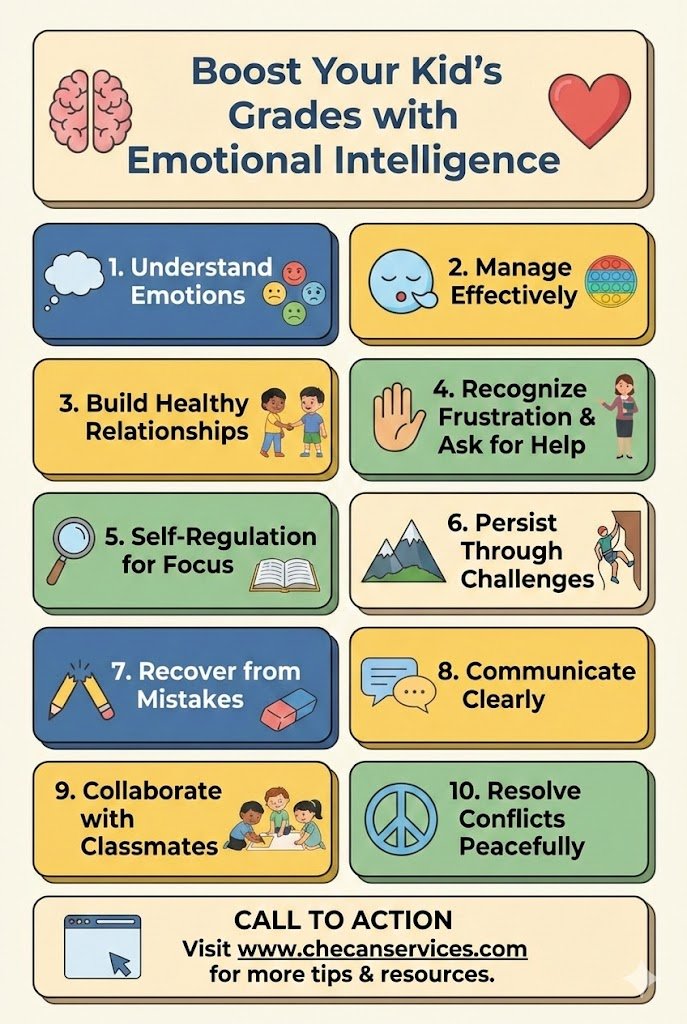
When we think about academic success, it’s easy to focus on grades, test scores, and how quickly kids pick up math or reading skills. But there’s another factor quietly shaping how well children perform in school: emotional intelligence. Often referred to as EQ, emotional intelligence is about understanding emotions, managing them effectively, and building healthy relationships. And for kids, this skill set can be just as important as IQ.
Emotional intelligence helps children navigate the social and emotional landscape of school, which directly affects how well they learn. A child who can recognize frustration, calm themselves down, and ask for help is far more likely to stay engaged than one who shuts down when things feel hard.
Emotional Regulation Supports Focus and Learning
One of the biggest academic benefits of emotional intelligence is self-regulation. Kids who can manage their emotions are better able to focus during lessons, persist through challenges, and recover from mistakes. Imagine a student who struggles with a math problem. Without emotional regulation, that frustration can quickly turn into avoidance or disruptive behavior. With it, the same student might take a deep breath, try a different approach, or ask a teacher for guidance.
Research popularized by Daniel Goleman shows that emotional self-control plays a major role in long-term success. In classrooms, this translates into better concentration, improved problem-solving, and more consistent academic effort.
Strong Social Skills Improve Classroom Engagement
School isn’t just about individual work; it’s a highly social environment. Emotional intelligence helps kids communicate clearly, collaborate with classmates, and resolve conflicts peacefully. These skills matter during group projects, classroom discussions, and even playground interactions that set the tone for the rest of the day.
Children with higher EQ are often more comfortable participating in class because they aren’t overwhelmed by fear of embarrassment or rejection. They’re better at reading social cues, understanding teachers’ expectations, and forming supportive friendships—all of which make school feel like a safer, more motivating place to learn.
Emotional Intelligence Builds Confidence and Resilience
Confidence is a powerful academic tool. When kids understand their emotions, they’re less likely to interpret setbacks as personal failures. Instead of thinking, “I’m bad at this,” they learn to think, “This is hard right now, but I can improve.”
This resilience encourages a growth mindset, where effort and learning matter more than perfection. Over time, emotionally intelligent children are more willing to try new subjects, take academic risks, and stick with challenging material. That persistence often leads to stronger performance across subjects.
How Emotional Intelligence Can Be Nurtured Early
The good news is that emotional intelligence isn’t fixed. Parents and educators can help kids develop EQ by encouraging emotional awareness, modeling calm problem-solving, and creating space for open conversations about feelings. Simple practices—like naming emotions, reflecting on social situations, or teaching calming strategies—can have a lasting academic impact.
Key Takeaways and Looking Ahead
As education continues to evolve, emotional intelligence is becoming less of a “soft skill” and more of an essential learning foundation. Kids who understand themselves and others are better equipped to focus, collaborate, and persevere—skills that support academic success well beyond the classroom.
If you’re interested in stories and ideas that explore emotional growth, resilience, and personal development in more depth, you may enjoy the ebooks by Louise Blount available on Apple Books. You can explore them here. They’re a thoughtful way to continue learning about the emotional skills that shape meaningful success.