Have you ever stood in a store aisle or hovered over the “Buy Now” button, only to close the tab instead? You’re not alone. Fear of making buying decisions is incredibly common — and it’s not about being bad with money. It’s about psychology.
In today’s world of endless choices, flash sales, reviews, and opinions, making a simple purchase can feel overwhelming. Let’s explore why that happens — and more importantly, how to move forward with confidence.
The Fear of Making the “Wrong” Choice
One of the biggest reasons people hesitate is the fear of regret.
What if there’s a better deal tomorrow?
What if someone else bought it cheaper?
What if it doesn’t work the way you imagined?
This fear is rooted in something psychologists call loss aversion — we feel the pain of losing money more strongly than the pleasure of gaining something valuable. Even small purchases can trigger this emotional tug-of-war.
The result? Decision paralysis.
Instead of risking regret, we delay the decision entirely.
Too Many Options Create Mental Overload
Modern consumers face more choices than ever before.
Buying a simple laptop, for example, might involve comparing 20 brands, dozens of models, and hundreds of reviews. Instead of feeling empowered, many people feel overwhelmed.
More options should mean better outcomes — but in reality, they often increase anxiety. The brain gets tired. The more comparisons we make, the less confident we feel.
Eventually, it becomes easier to avoid buying anything at all.
Money Anxiety and Scarcity Mindset
Another powerful factor is financial insecurity — even when someone is financially stable.
If you grew up hearing phrases like “money doesn’t grow on trees” or experienced financial instability, you may carry a scarcity mindset. That mindset makes every purchase feel risky.
Even when you can afford something, your brain whispers:
“What if you need this money later?”
This kind of fear isn’t about logic. It’s emotional memory.
And emotions often override spreadsheets.
Social Pressure and Judgment
We also live in a highly visible world.
People post their purchases online. Reviews can be harsh. Opinions are everywhere.
This creates subtle pressure:
Will others think this was a good choice?
Does this brand reflect who I am?
Am I spending responsibly compared to others?
Buying decisions are no longer private. They feel like reflections of identity.
That added social layer increases hesitation.
Perfectionism and the Illusion of the “Best”
Many people delay purchases because they’re searching for the perfect option.
But here’s the truth: perfect rarely exists.
There is often no single “best” phone, car, course, or product — only what fits your needs right now. Waiting for absolute certainty can mean missing opportunities or wasting time.
Perfectionism disguises itself as smart decision-making. In reality, it’s often fear of imperfection.
How to Make Buying Decisions with More Confidence
The good news? This fear is manageable.
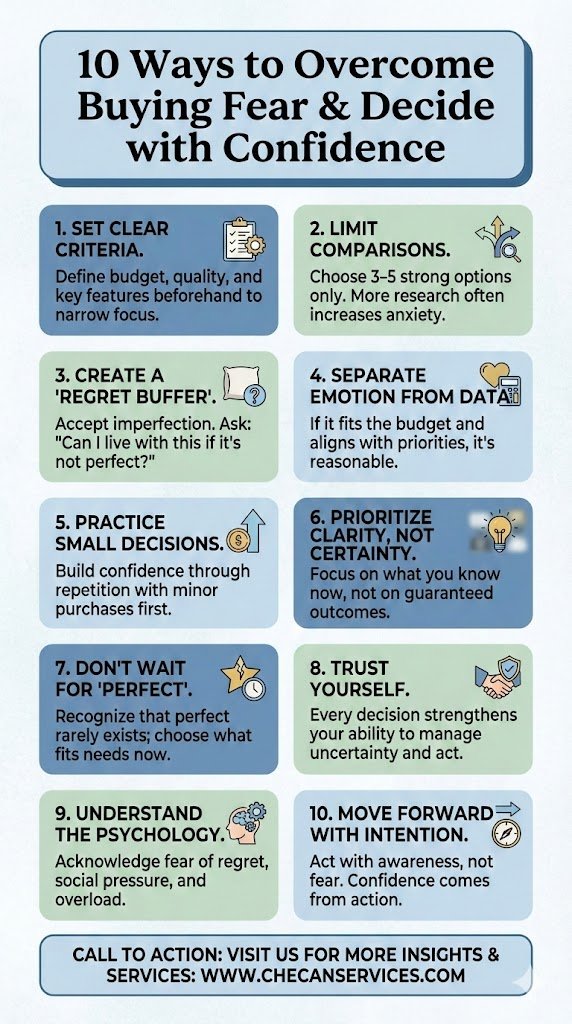
Here are simple ways to reduce buying anxiety:
1. Set clear criteria before shopping.
Decide what matters most — price range, quality, features — and stick to it.
2. Limit comparisons.
Choose 3–5 strong options instead of 25. More research doesn’t always equal better results.
3. Create a “regret buffer.”
Ask yourself: If this isn’t perfect, can I live with that? Most purchases are reversible or adaptable.
4. Separate emotion from numbers.
If it fits your budget and aligns with your priorities, it’s usually a reasonable decision.
5. Practice small decisions.
Confidence builds with repetition. The more decisions you make, the easier they become.
What This Means for Your Future
Learning to make confident buying decisions isn’t just about shopping. It’s about trusting yourself.
Every decision you make strengthens your ability to evaluate risk, manage uncertainty, and move forward despite imperfect information.
The future belongs to people who can act — not those waiting for guarantees.
You don’t need certainty. You need clarity.
Key Takeaways
Fear of buying decisions often comes from regret avoidance, too many options, money anxiety, social pressure, and perfectionism.
Understanding the psychology behind hesitation makes it less intimidating.
The goal isn’t to eliminate fear completely — it’s to move forward with awareness and intention.
If you enjoy exploring practical psychology and real-life decision-making insights like this, you might find deeper encouragement and guidance in Louise Blount’s books. Her Apple Books collection offers thoughtful perspectives on confidence, mindset, and personal growth that can help you navigate everyday choices with more ease.