Have you ever had a prospect say, “I just need to think about it,” and then disappear?
If you work in sales, consulting, coaching, or run any kind of service-based business, you’ve likely seen this pattern more times than you’d like to admit. On the surface, it looks like hesitation. But underneath, there’s usually something much more human going on.
Understanding why prospects delay decisions can completely change how you approach selling—and how successful you’ll be in the future.
Let’s break it down.
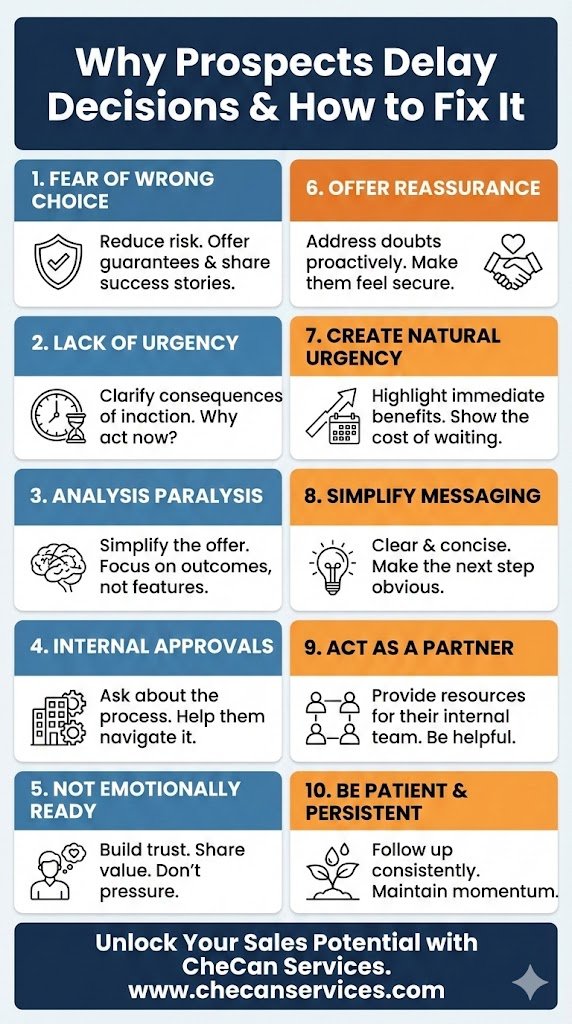
1. Fear of Making the Wrong Choice
One of the biggest reasons prospects delay decisions is simple: fear.
People don’t just buy products or services. They buy outcomes. And outcomes carry risk. What if it doesn’t work? What if they waste money? What if they look foolish for choosing the wrong solution?
In today’s world of endless options and online reviews, decision anxiety is higher than ever. A prospect might genuinely like your offer, but the pressure of choosing can feel overwhelming.
Instead of pushing harder, the smarter move is to reduce perceived risk. Offer clear guarantees. Share testimonials. Walk them through what success actually looks like. When fear drops, decisions speed up.
2. Lack of Urgency
Sometimes, the problem isn’t doubt—it’s timing.
If a prospect doesn’t feel immediate pain, your solution gets pushed to “later.” Think about gym memberships in January versus July. The urgency is different.
Your job isn’t to manufacture pressure. It’s to clarify consequences. What happens if they wait three months? Six months? A year?
When people understand the cost of inaction, delay becomes less comfortable.
3. Too Much Information
We live in an era of information overload.
Prospects often research extensively before committing. They compare competitors, watch videos, read articles, and ask for opinions. Ironically, the more information they gather, the harder it becomes to choose.
This is called analysis paralysis.
If you overwhelm prospects with features, options, and technical details, you contribute to the delay. Instead, simplify. Focus on outcomes. Paint a clear, straightforward picture of the next step.
Clarity closes deals. Complexity stalls them.
4. Internal Approval Processes
In B2B sales especially, the person you’re speaking with may not be the final decision-maker.
They might need approval from a manager, finance team, or partner. Even if they’re excited, they may feel stuck.
Rather than waiting passively, ask questions like:
- Who else needs to be involved in this decision?
- What does your approval process look like?
- Is there anything I can provide to make this easier internally?
Helping your prospect navigate their internal system positions you as a partner, not just a seller.
5. Emotional Readiness
Buying decisions are emotional first, logical second.
Even in professional settings, people buy when they feel ready. Sometimes they need time to process the idea of change.
Imagine hiring a business coach. The financial investment might make sense on paper, but emotionally, it means admitting you need help. That takes courage.
Instead of pressuring, focus on building trust. Follow up with value. Share insights. Stay present without being pushy.
Often, the delay isn’t rejection—it’s emotional processing.
What This Means for Your Strategy
If prospects delay decisions, it doesn’t automatically mean your offer is weak.
It may mean:
- They need reassurance.
- They don’t feel urgency yet.
- They’re overwhelmed.
- They need internal approval.
- They’re not emotionally ready.
The future of successful selling isn’t about aggressive tactics. It’s about understanding human psychology.
As markets become more competitive, the businesses that win will be the ones that make decision-making easier, safer, and clearer.
That means simplifying your messaging. Highlighting transformation instead of features. Addressing objections before they arise. And most importantly, staying patient while maintaining momentum.
Looking Ahead
Prospect hesitation isn’t your enemy—it’s information.
When someone delays, it’s a signal. Instead of reacting emotionally, get curious. Ask better questions. Refine your process. Strengthen your follow-up systems.
Over time, you’ll start recognizing patterns. And once you understand the real reasons behind delay, you’ll close more deals without feeling pushy or desperate.
If you’re interested in thinking more deeply about decision-making, influence, and personal growth in business, you might enjoy exploring Louise Blount’s books. Her Apple Books collection offers thoughtful perspectives that can sharpen both your mindset and your strategy.