In a world filled with schedules, screens, and constant stimulation, rest can feel like an afterthought for children. Yet rest and downtime aren’t luxuries—they’re essential building blocks for healthy brain development. If you’ve ever noticed how a child seems calmer, more creative, or more focused after a good nap or quiet afternoon, you’ve already seen this science in action.
Children’s brains grow at an astonishing rate, especially in the early years. But growth doesn’t only happen when kids are actively learning or being taught. Some of the most important brain development occurs when children are resting, daydreaming, or simply doing “nothing.”
How Rest Supports Brain Growth
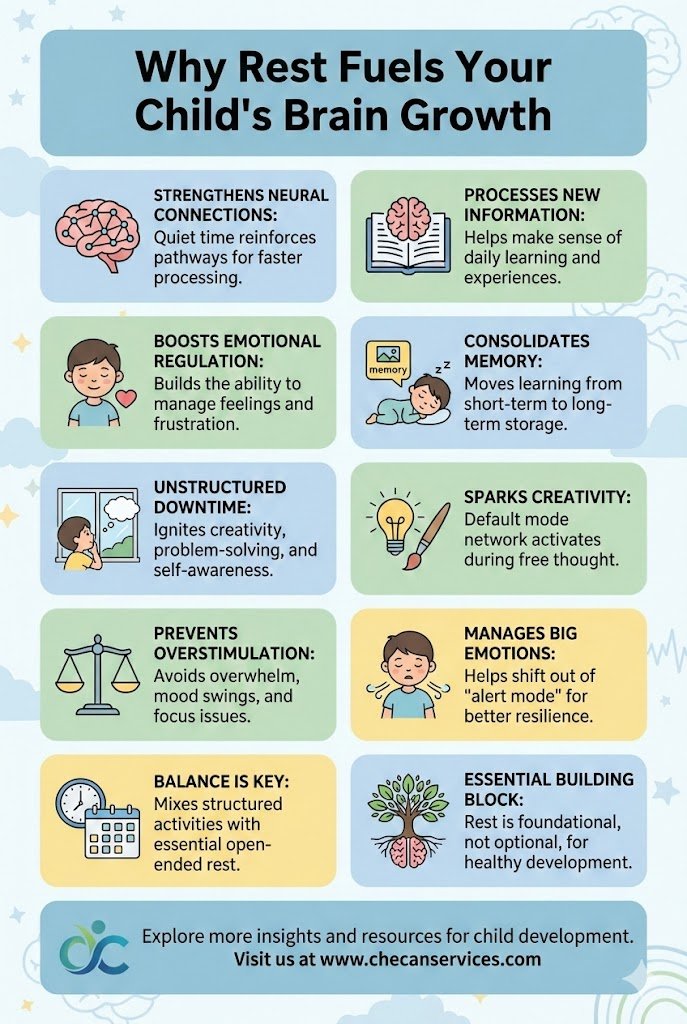
When children rest, their brains are busy behind the scenes. During sleep and quiet downtime, the brain strengthens neural connections, processes new information, and clears out unnecessary clutter. This process helps children make sense of what they’ve learned during the day—whether it’s new words, social skills, or emotional experiences.
For example, a child who practices counting during the day often understands it better after a night of sleep. That’s because rest helps move learning from short-term memory into long-term storage. Without enough rest, those connections stay fragile.
Downtime also supports emotional regulation. When children have moments of calm—reading quietly, drawing, or lying on the floor thinking—their brains learn how to shift out of “alert mode.” This makes it easier for them to manage frustration, anxiety, and big emotions later on.
The Power of Unstructured Downtime
Not all rest looks like sleep. Unstructured downtime—free play, quiet imagination, or simply staring out the window—is just as important. During these moments, the brain’s default mode network becomes active. This network is linked to creativity, self-awareness, and problem-solving.
Think about a child building stories with toys or inventing games on their own. That’s not wasted time. It’s brain growth in action. These moments help children develop independent thinking and creativity—skills they’ll rely on throughout life.
Why Over-Scheduling Can Backfire
Many well-meaning parents fill children’s days with activities to give them “every advantage.” But too much stimulation can overwhelm a developing brain. Without enough rest, children may struggle with focus, mood swings, and even learning delays.
Balance is key. Structured learning and activities are valuable, but they work best when paired with intentional rest and open-ended time.
Key Takeaways for Parents and Caregivers
Rest fuels learning, memory, and emotional balance. Sleep and quiet downtime help children’s brains grow stronger and more flexible. Unstructured moments spark creativity and independence. By protecting rest time, you’re not slowing your child down—you’re setting them up to thrive.
Looking Ahead
As we learn more about brain science, one message keeps getting clearer: children don’t need constant stimulation to grow smarter. They need space to rest, reflect, and recharge. Creating that space today supports healthier, more resilient minds for the future.
If you’re interested in thoughtful, child-centered insights on growth, learning, and emotional wellbeing, explore the inspiring ebooks by Louise Blount available on Apple Books. You can discover them through her collection on Apple Books and find resources that gently support children—and the adults who care for them—every step of the way.