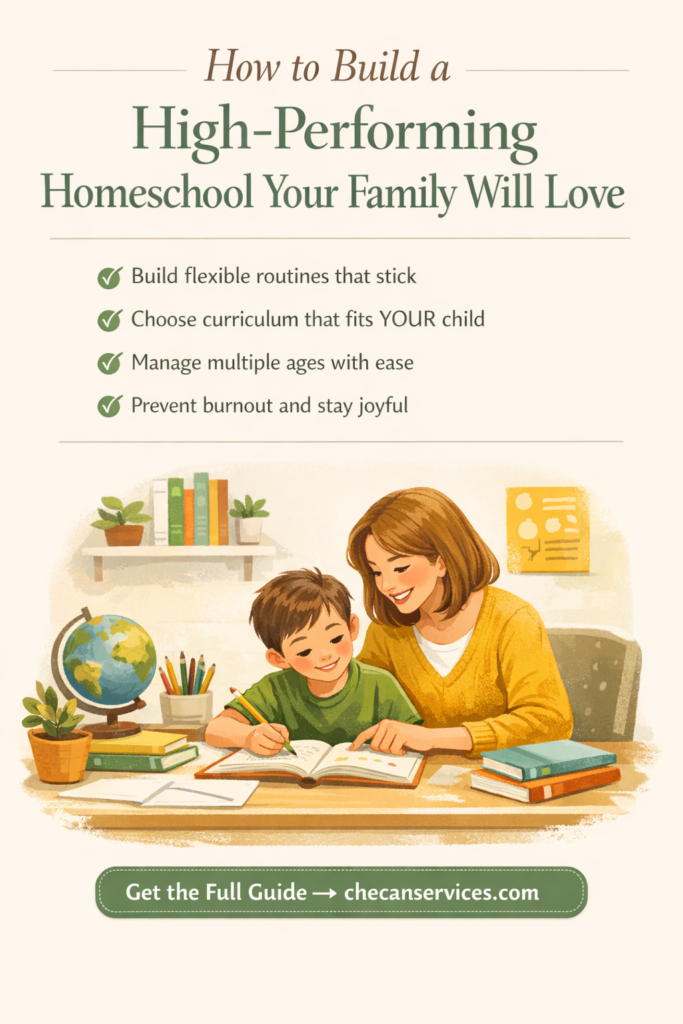
Homeschooling is one of the most rewarding decisions a family can make — but let’s be honest, it can also feel overwhelming. Between choosing the right curriculum, keeping kids motivated, managing different age groups, and somehow avoiding burnout, many parents wonder if they’re doing it “right.” The good news? There’s no single right way, but there are smart strategies that make a real difference.
Whether you’re just starting out or looking to level up your approach, this guide walks you through the key principles behind a truly high-performing homeschool — one that balances academic excellence with joy, curiosity, and meaningful connection.
Start With a Clear Vision for Your Homeschool
Before you open a single workbook, ask yourself: What do I want my child to gain from this experience?
High-performing homeschools don’t happen by accident. They’re built on intentional goals. Some families prioritize classical education and strong literacy skills. Others focus on project-based learning or real-world exploration. Many want a blend of both.
Take time to write down your educational philosophy. This doesn’t need to be complicated — even a few bullet points can serve as your guiding compass when decisions get hard. When you know your “why,” everything else becomes easier to plan around.
Build Routines That Work for Real Life
One of the biggest myths about homeschooling is that it requires a rigid school-at-home schedule. In reality, the most effective homeschool families create flexible routines — not rigid timetables.
A good routine gives your day structure without stifling spontaneity. It might look like: morning reading before breakfast, core subjects mid-morning when energy is highest, and creative or hands-on projects in the afternoon. The key is consistency, not perfection.
Routines also reduce decision fatigue. When kids know what to expect, there’s less resistance and more focus. Over time, your routine becomes the backbone of a productive, low-stress homeschool day.
Choose Curriculum Wisely — and Don’t Be Afraid to Mix and Match
With hundreds of homeschool curricula on the market, the choices can feel paralyzing. Here’s a liberating truth: no single curriculum does everything perfectly.
Many successful homeschool families use one resource for math, another for language arts, and something entirely different for science or history. You are not locked into a box. Your child’s learning style, your teaching style, and your family’s values should all factor into what you choose.
When evaluating curriculum, consider:
- Learning style — Is your child a visual learner, a hands-on builder, or a strong reader?
- Your schedule — Does the program require heavy parental involvement daily?
- Flexibility — Can you adapt lessons to your child’s pace?
Give yourself permission to try something, evaluate it honestly after a few weeks, and adjust. Great homeschooling is iterative.
Managing Multiple Ages Without Losing Your Mind
If you’re homeschooling more than one child, you already know this challenge well. The secret? Loop in learning wherever you can.
History, science, and read-alouds are natural subjects to teach across age groups. While a younger child might absorb the story or big ideas, an older child digs deeper into analysis or written responses. You’re teaching the same material at different depths — saving your time and building sibling community in the process.
For subjects that truly need to be individualized, like math or reading, use independent work periods strategically. Stagger when each child needs your direct attention so you’re not being pulled in five directions simultaneously.
Preventing Burnout — For You and Your Kids
Burnout is real, and it affects both parents and children. The antidote isn’t doing less — it’s doing things that refuel you alongside the hard work.
Build margin into your week. Schedule nature walks, field trips, free reading time, and creative play. These aren’t “extras” — they’re essential to a sustainable, joyful homeschool. A child who loves learning will outpace one who is simply compliant every single time.
As a parent-educator, protect your own energy too. Connect with homeschool communities, take breaks without guilt, and remember that you don’t have to have all the answers. Curiosity is contagious — model it.
Raise a Lifelong Learner, Not Just a Good Student
The ultimate goal of a high-performing homeschool isn’t a perfect transcript. It’s a child who is genuinely curious, self-motivated, and equipped to keep learning long after formal lessons end.
That means making space for your child’s interests, asking good questions, letting them lead projects, and celebrating effort over perfection. Academic skills matter deeply — and they flourish best in an environment where learning feels meaningful.
Ready to build that kind of homeschool? High-Performing Homeschool is a practical, encouraging guide packed with expert strategies and real-life examples to help your family thrive — academically and beyond.
From setting up routines and picking the right curriculum to managing multiple ages and beating burnout, this book gives you the clarity and tools to make homeschooling both high-achieving and deeply joyful. Pick up your copy here and start building the homeschool your family deserves — one meaningful day at a time.