Raising environmentally aware children doesn’t mean you need to overhaul your entire life overnight. It doesn’t require a composting system in your backyard, solar panels on your roof, or a perfectly zero-waste kitchen. What it does require is intention — small, consistent choices that quietly shape how your children see the world and their place in it.
Green parenting is less about perfection and more about direction. And the good news? You’re probably already doing more than you think.
Why Green Parenting Matters More Than Ever
Children today are growing up in a world where climate change, pollution, and resource depletion are part of the daily conversation. But awareness alone doesn’t create change — habits do. When kids learn early that their choices matter, that turning off a light or saying no to a plastic straw is connected to something bigger than themselves, those habits become values. And values last a lifetime.
Research consistently shows that children who develop a connection to nature early in life are more likely to become environmentally responsible adults. Green parenting isn’t just good for the planet — it’s good for your kids’ sense of purpose, empathy, and responsibility.
Start with What’s Already in Your Home
You don’t need to buy anything new to start raising eco-conscious kids. In fact, that’s kind of the point. Look around your home and you’ll find a dozen teachable moments waiting:
- Why does food go in the compost instead of the trash?
- Why do we turn off the tap while brushing our teeth?
- Why do we bring our own bags to the grocery store?
These aren’t chores. They’re conversations. And every conversation is a chance to help your child understand that the Earth is something we borrow — not something we own.
Simple daily rituals like sorting recycling together, choosing reusable water bottles, or making a game of turning off lights when leaving a room build real habits. Over time, these small acts stop feeling like rules and start feeling like values your family simply holds.
Make Sustainability Fun, Not Preachy
Here’s where a lot of well-meaning parents lose the thread. Eco-living can start to feel like a long list of things you can’t do — no straws, no fast fashion, no plastic toys. That kind of framing exhausts kids and adults alike.
The better approach? Make it an adventure.
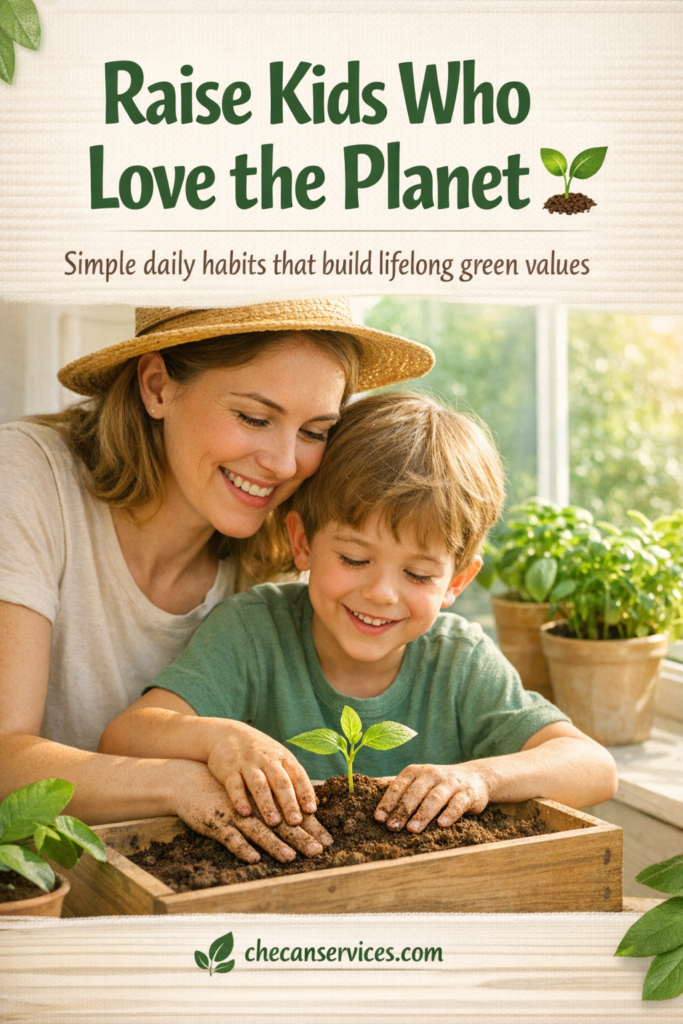
Plant something together, even if it’s just a pot of herbs on a windowsill. Visit a local farmer’s market and talk about where food actually comes from. Challenge yourselves to a “no new plastic” week and see how creative you can get. Celebrate eco-friendly birthdays with experiences instead of piles of stuff — a nature hike, a picnic, a DIY craft day.
When sustainability feels like discovery rather than deprivation, children embrace it naturally. They become curious, not resentful.
Teaching Kids to Reduce Waste Without the Guilt Trip
Waste is one of the most visible environmental issues, and it’s one kids can actually see and understand. The overflowing trash bin, the packaging from a new toy, the half-eaten food scraped into the garbage — these are concrete, tangible things.
Start small. Introduce the idea of “need versus want” when shopping. Encourage repairing broken things before replacing them. Get kids involved in donating outgrown clothes and toys rather than tossing them. These aren’t just waste-reduction strategies — they’re lessons in gratitude, resourcefulness, and generosity.
You don’t need to lecture. Just narrate. “We’re giving this to someone who needs it” teaches more than any speech about landfills.
Energy Conservation as a Family Value
Saving energy is abstract for kids — until you make it concrete. Explain that electricity comes from somewhere, that it costs the Earth something to produce, and that every light left on or device left charging adds up. Then make it a family project.
Create a simple chart. Celebrate when the electricity bill goes down. Let your child be the official “light checker” before bed. Small ownership creates big investment.
Raising Kids Who Care About the Earth for Life
The goal of green parenting isn’t to raise little environmentalists who lecture their friends. It’s to raise humans who feel a natural sense of responsibility toward the world they live in — who pick up litter without being asked, who think about where things come from, who grow up knowing that their choices matter.
If you’re looking for a practical, chapter-by-chapter guide to making this a reality in your home, Green Parenting: Raising Kids for a Sustainable World is exactly the kind of resource that makes the journey feel doable — and even joyful.
It covers everything from daily habits and energy conservation to celebrating eco-friendly milestones, all through the lens of a real family trying to do better. Whether you’re just starting out or already deep into sustainable living, there’s something in it for you.
Because the truth is, the best thing you can do for the planet is raise kids who love it. And that starts at home, one small choice at a time.