Parenting

A warm Pinterest-style parenting graphic showing a parent sitting at eye level with a young child in a cozy living room. Soft natural light streams through a nearby window, highlighting warm cream, sage green, terracotta, and wood tones. The child smiles with quiet confidence while making eye contact with the parent. Below the image, a clean cream-colored text panel displays the headline “Stop Praising. Start Building Real Confidence.” and the subtitle “The difference between self-esteem and self-worth — and why it changes everything.” The website checanservices.com appears at the bottom.
Parenting

How to Raise a Child Who Knows Their Own Worth

If constant praise isn’t building the confidence you hoped for, the problem may not be how much you encourage your child — but what kind. This article explores the crucial difference between self-esteem and self-worth, and offers practical, psychology-backed strategies for raising children who feel secure from the inside out. Learn the language shifts, the mindset changes, and the parenting habits that build real, lasting confidence.

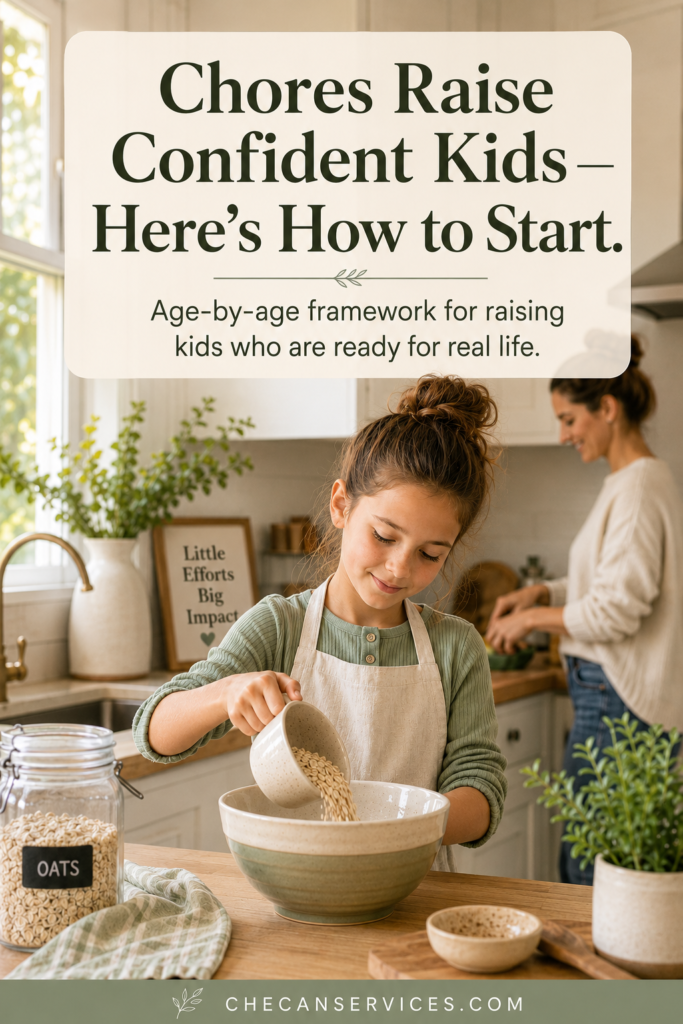
A warm Pinterest pin featuring a child in a bright farmhouse-style kitchen pouring ingredients into a mixing bowl while a parent is visible in the background. The pin headline reads "Chores Raise Confident Kids — Here's How to Start" with the subtitle "Age-by-age framework for raising kids who are ready for real life." The color palette includes warm whites, sage green, and natural wood tones, with the website ChecanServices.com displayed at the bottom.
Parenting

How to Raise Independent Kids Using Household Chores

If your child excels at every activity but struggles with basic life tasks, the missing ingredient might be simpler than you think: household chores. Research — including the landmark Harvard Grant Study — shows that kids who contribute at home develop stronger confidence, resilience, and real-world readiness than those who don’t. Here’s how to make it happen at every age.

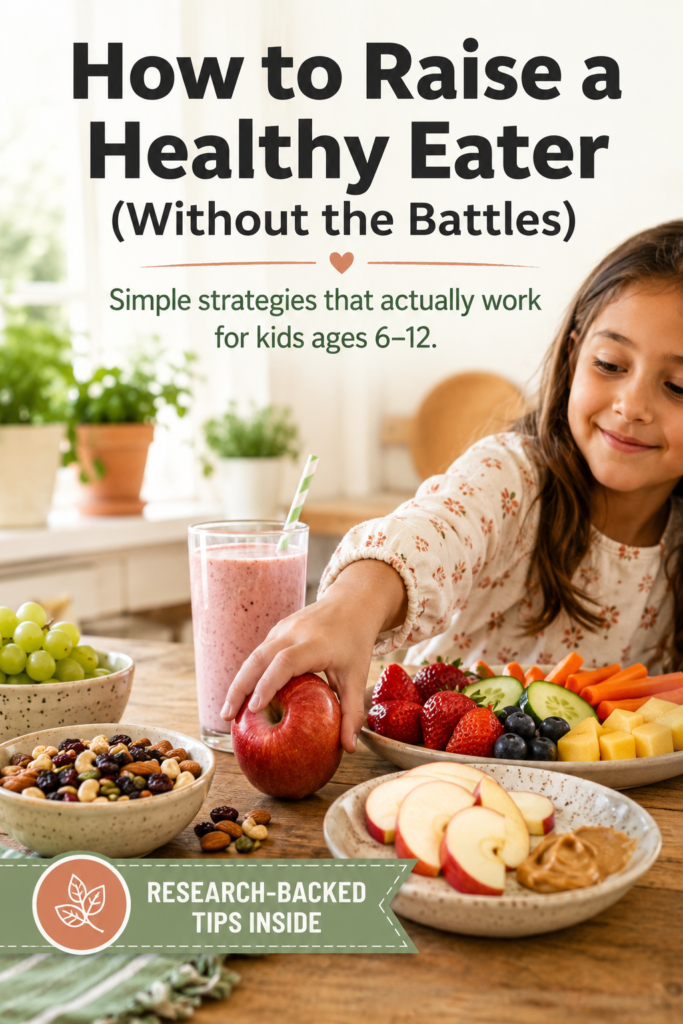
A bright, cozy kitchen with natural sunlight streaming through the windows. A wooden table is filled with colorful healthy foods including sliced apples, berries, grapes, vegetables, trail mix, and a pink smoothie. A child reaches for a red apple while smiling. Soft greenery and potted herbs appear in the blurred background. Text overlay reads, “How to Raise a Healthy Eater (Without the Battles)” with a subtitle about simple strategies for kids ages 6–12 and a badge that says “Research-Backed Tips Inside.”
Parenting

How to Raise a Healthy Eater Without the Dinner Table Drama

The food habits your child builds between ages six and twelve will shape their relationship with eating for life — and building good ones doesn’t have to mean dinner table battles. This guide breaks down exactly what school-age kids need nutritionally, how to handle picky eating without the stress, and how to design a home where healthy choices come naturally. Practical, research-backed, and refreshingly guilt-free.

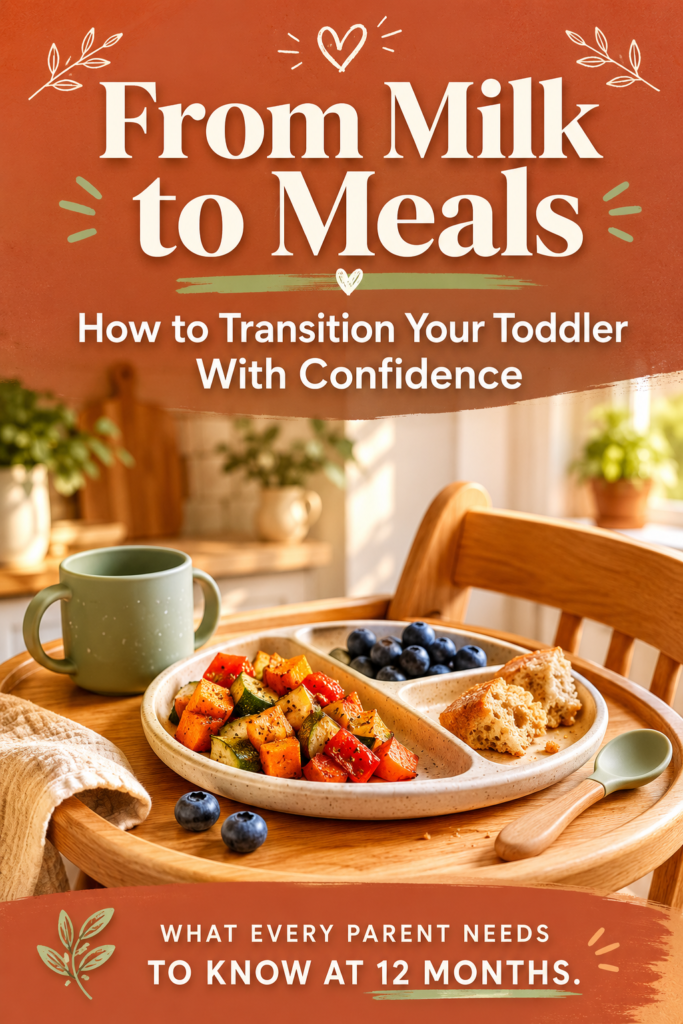
A warm, sunlit kitchen scene featuring a wooden high chair tray with a toddler meal of roasted vegetables, blueberries, and soft bread. The image includes the headline "From Milk to Meals: How to Transition Your Toddler With Confidence" on a muted terracotta background, with soft sage green accents and a nurturing, editorial-style design aimed at parents of 12-month-old children.
Parenting, Toddlers

How to Transition Your Toddler From Milk to Solid Foods

The switch from milk to meals around your child’s first birthday is one of the most important — and most confusing — transitions in early parenthood. This guide breaks down what your toddler actually needs nutritionally, how to build meals that work with their appetite instead of against it, and how to avoid the picky eater traps most families unknowingly fall into. Real advice, no fluff.

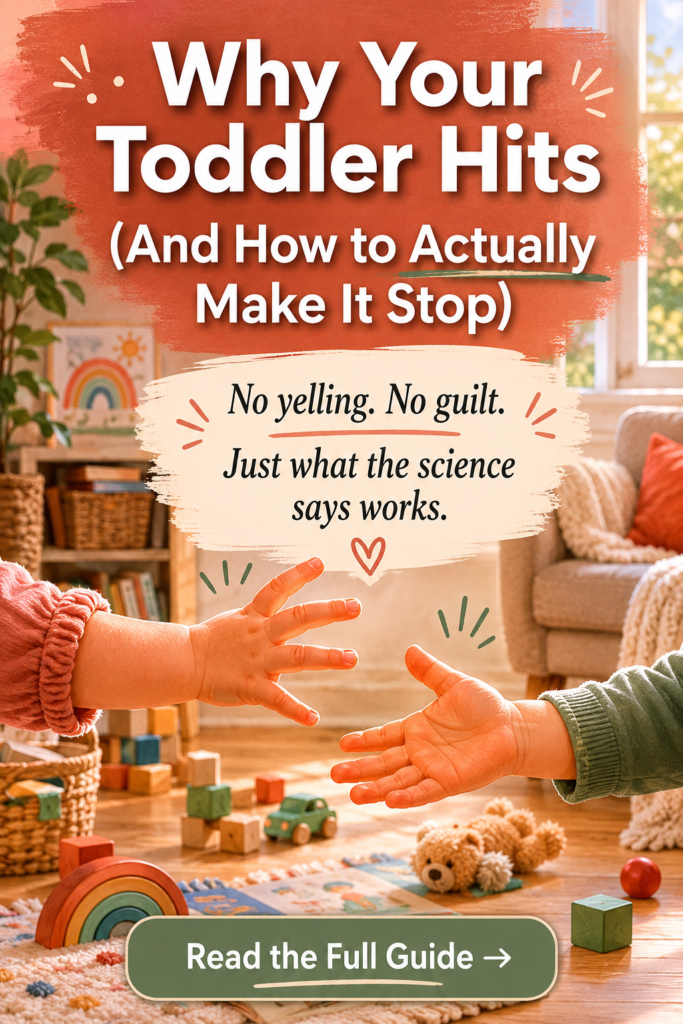
Illustrated parenting guide cover showing two toddlers reaching toward each other in a cozy playroom with toys, promoting science-backed ways to stop toddler hitting without yelling or guilt.
Parenting, Toddlers

How to Stop Toddler Hitting Without Losing Your Mind

If your toddler is hitting, biting, or throwing things, it’s not defiance — it’s a developing brain doing exactly what developing brains do. Learn what’s really driving toddler aggression and discover the compassionate, neuroscience-backed strategies that actually help kids learn to stop. This guide cuts through the guilt and gives you real tools that work.

Scroll to Top