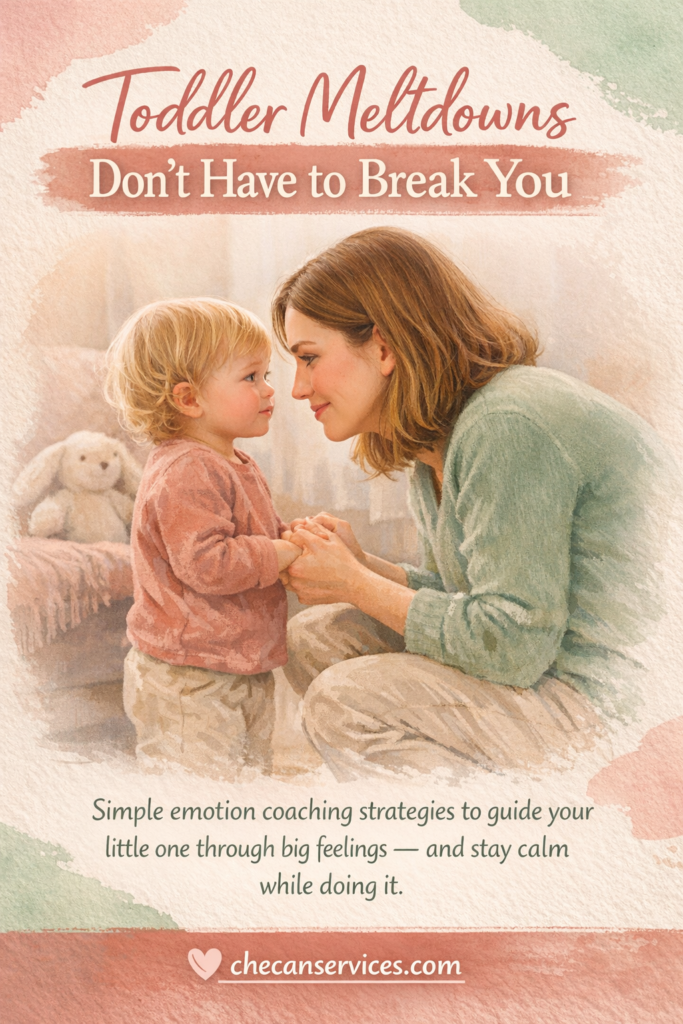
With simple emotion coaching strategies, you can stay calm, connect deeply, and guide your child through big feelings with confidence.
Toddlers are tiny humans with enormous emotions — and absolutely no idea what to do with them. One minute everything is fine, and the next, your child is on the floor sobbing because their banana broke in half. If you’ve been there (and every parent has), you already know that reasoning your way out of a toddler meltdown rarely works.
The good news? There’s a better way. It’s called emotion coaching, and it can genuinely transform the way you connect with your child during those stormy moments.
What Is Emotion Coaching and Why Does It Matter?
Emotion coaching isn’t about fixing your child’s feelings — it’s about helping them understand those feelings in the first place. When toddlers melt down, they’re not being manipulative or difficult. They’re experiencing an emotional flood they simply don’t have the tools to manage yet.
Emotion coaching gives them those tools.
Research consistently shows that children who receive emotion coaching from their caregivers develop stronger self-regulation skills, better social relationships, and greater resilience over time. In other words, the patience you invest now pays off in a big way later.
Decoding the Toddler Meltdown
Before you can respond well to a tantrum, it helps to understand what’s actually happening. Most toddler meltdowns are triggered by a handful of core experiences:
- Frustration — they want something and can’t have it or can’t do it
- Overwhelm — too much stimulation, too many transitions, too little sleep
- Unmet needs — hunger, tiredness, or a need for connection
- Lack of language — they feel something intensely but can’t name or express it
When you start seeing a meltdown as a communication attempt rather than a behavior problem, your whole response shifts. Instead of trying to stop the feeling, you start trying to understand it.
How to Stay Calm When Your Toddler Isn’t
Here’s the hard truth: your nervous system sets the tone. When you escalate, your child escalates. When you stay regulated, you give your child something to co-regulate with.
That doesn’t mean you have to be a robot. It means pausing before responding. Taking one breath. Getting down to your child’s eye level. Using a calm, quiet voice even when everything in you wants to raise it.
A few things that help in the moment:
- Name what you see: “You’re really upset right now. That was really hard.”
- Validate without giving in: “I know you wanted more screen time. It’s okay to feel disappointed.”
- Stay close: Physical presence is often more powerful than words during a meltdown.
You don’t have to have the perfect thing to say. Presence and calm are enough to start.
Teaching Toddlers to Name Their Feelings
One of the most powerful things you can do for your toddler is help them build an emotional vocabulary. Children who can name their feelings are far better at managing them.
Start simple. Happy, sad, mad, scared, and silly will get you a long way. Use feeling words throughout your day — not just during hard moments. “You seem really excited about that!” or “I notice you look a little worried” plants seeds without any pressure.
Picture books about emotions are wonderful tools too. Reading stories where characters navigate big feelings gives toddlers a safe space to explore emotions before they’re in the middle of one.
Building Emotional Resilience Over Time
Emotion coaching isn’t a one-time intervention — it’s a daily practice. Every small moment where you acknowledge your child’s feelings, help them put words to an experience, or sit with them through discomfort is building something lasting.
Empathy, self-regulation, and emotional intelligence don’t develop from being shielded from hard feelings. They develop from being guided through them — by a calm, connected caregiver who says, in effect, your feelings are okay, and I’m right here.
If you want a comprehensive, chapter-by-chapter roadmap for doing exactly that, Big Feelings: Guiding Toddlers Through Emotional Storms is the resource you need. It walks you through everything from decoding tantrums to teaching empathy — with relatable examples and practical strategies you can use starting today.
You Don’t Have to Get It Perfect
Parenting toddlers is hard. There will be days you lose your cool, say the wrong thing, or just survive the moment without any grace at all. That’s normal. What matters most isn’t perfection — it’s repair and consistency.
Every time you reconnect after a hard moment, you’re teaching your child something invaluable: that relationships can hold big feelings, and that they are safe with you.
That’s the foundation everything else is built on.