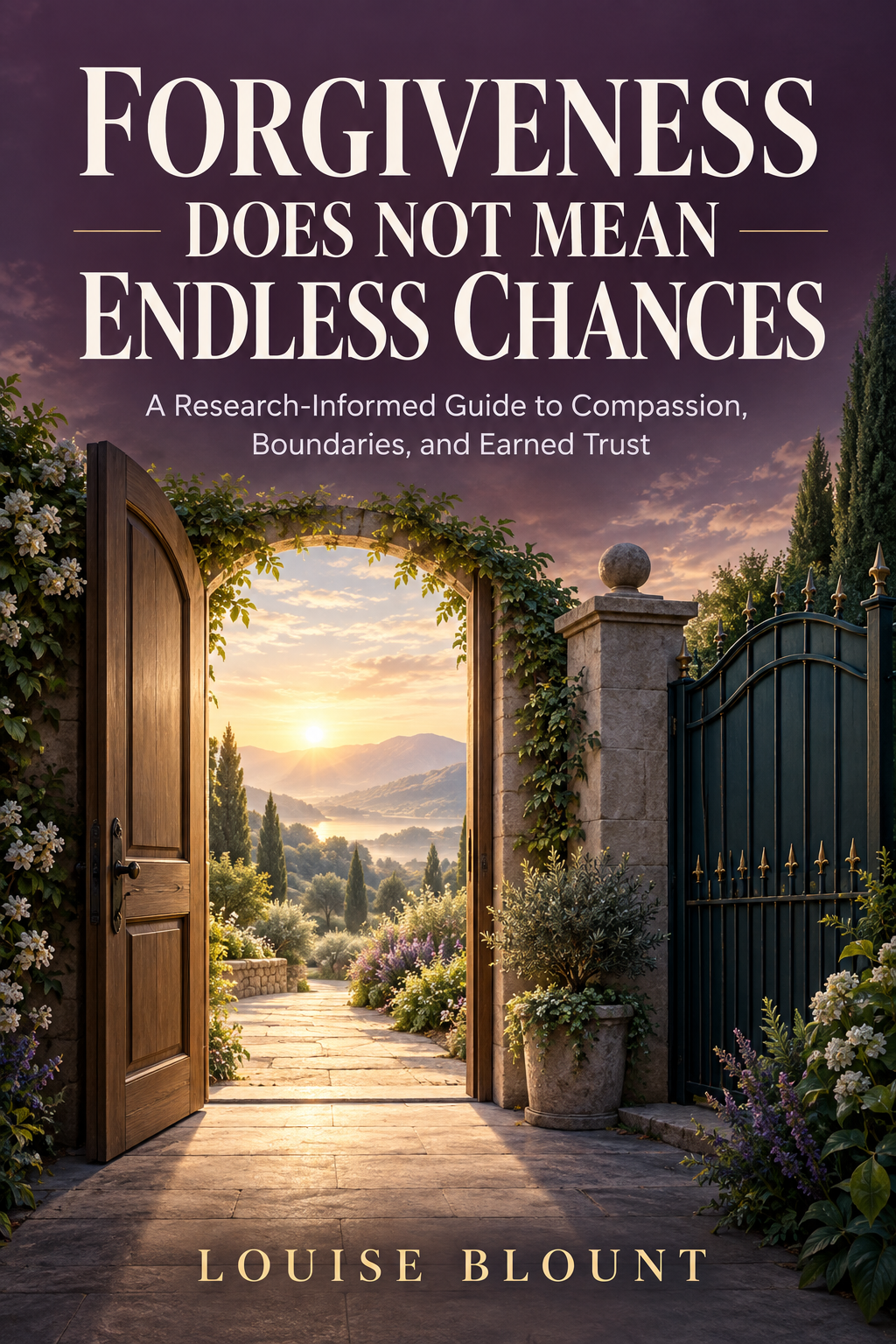
Forgiveness can help you heal, but it does not require you to keep giving someone opportunities to hurt you.
In Forgiveness Does Not Mean Endless Chances, Louise Blount explains how to release resentment while still protecting your peace, dignity, safety, and future. This compassionate, research-informed guide separates forgiveness from reconciliation, trust, and renewed access—decisions that are often mistakenly treated as one and the same.
Drawing on current psychological and relationship research, the book explores both the potential benefits of forgiveness and the risks of forgiving without accountability. It shows why apologies alone are not proof of change, how repeated chances can reinforce harmful patterns, and why trust should be rebuilt gradually through consistent behavior.
Inside this ebook, you will learn:
- How forgiveness differs from reconciliation, trust, and renewed contact
- Why people continue giving chances even when nothing meaningfully changes
- How to distinguish an isolated mistake from an established pattern
- What genuine accountability and lasting change look like
- How to create clear, enforceable boundaries without unnecessary conflict
- How to use the Trust Ladder to restore access gradually
- When reconciliation may be reasonable—and when it is healthier to step away
- How to manage difficult family, workplace, friendship, and co-parenting situations
- How to work through guilt, grief, anger, and self-forgiveness
The ebook includes realistic fictional case studies, practical examples, boundary scripts, apology and accountability checklists, contact-level guidance, a thirty-day clarity plan, and chapter-by-chapter action lists.
This is not a book about becoming cold, bitter, or unforgiving. It is about understanding that compassion does not require unlimited access. You can recognize another person’s humanity without ignoring their behavior. You can hope they change without risking your well-being while you wait.
Forgiveness Does Not Mean Endless Chances is for anyone struggling with repeated disappointment, broken promises, damaged trust, unhealthy family expectations, difficult relationships, or the fear that setting boundaries makes them a bad person.
You can release the past without volunteering your future.


Reviews
There are no reviews yet.