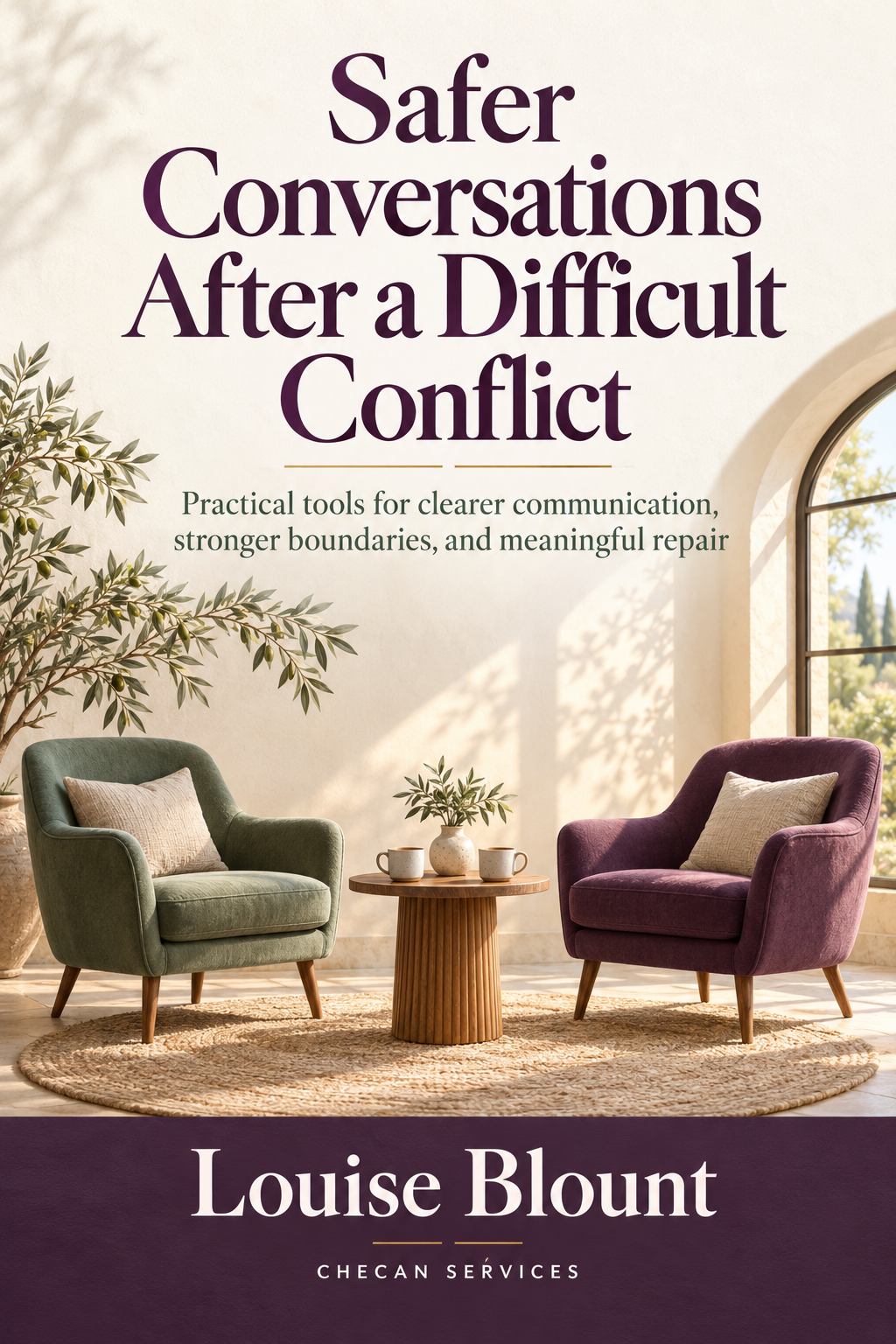
Find a more thoughtful way forward after conflict.
The argument may be over, but the hurt, tension, and uncertainty can remain. What should you say next? How can you explain your needs without reopening the same disagreement? And how do you recognize when another conversation may not be safe or helpful?
Safer Conversations After a Difficult Conflict by Louise Blount offers compassionate, practical guidance for approaching these questions with greater clarity. Rather than pushing for immediate forgiveness or reconciliation, this ebook makes room for choice, boundaries, accountability, and meaningful change.
Inside this ebook, you will explore how to:
- Decide whether to talk, postpone the discussion, or seek independent support.
- Take a useful pause without treating every disagreement as an emergency.
- Prepare one clear purpose and open a conversation without minimizing your concern.
- Listen carefully while keeping your own perspective and boundaries.
- Set practical limits around insults, repeated messages, and unwanted pressure.
- Recognize apologies that take responsibility and connect them to concrete repair.
- Adapt communication to family relationships, friendships, workplaces, and digital settings.
- Evaluate progress through consistent behavior rather than reassuring promises alone.
Practical support you can return to
The ebook includes ten chapters, realistic fictional case studies, sample conversations, chapter checklists, personal preparation and agreement cards, and a flexible seven-day practice plan. Each chapter begins on a new page in a professionally designed, 28-page PDF.
Research-informed and safety-conscious
Drawing on research and professional guidance checked in October 2026, the book explains both the usefulness and the limits of communication tools. It clearly distinguishes ordinary disagreements from situations involving coercion, intimidation, or abuse. It also separates completed research findings from studies still being planned.
You do not need perfect words to deserve respectful treatment. Whether your next step is a conversation, a boundary, a pause, or outside support, this guide helps you approach it with greater intention.
Author: Louise Blount
Format: PDF ebook
Length: Approximately 6,400 words across 28 pages
This ebook provides educational information, not personalized therapy, legal advice, or an emergency safety plan. All named case studies and dialogues are fictional teaching examples. Communication techniques cannot guarantee safety or prevent another person’s abusive behavior.


Reviews
There are no reviews yet.