How you explain ADHD to a child becomes the inner voice they carry for life.
By age twelve, a child with ADHD hears an estimated 20,000 more corrective or negative messages than their neurotypical peers. Without an accurate, compassionate framework for why their brain works the way it does, children fill in the blanks themselves—often concluding that they are “broken,” “lazy,” or “bad.”
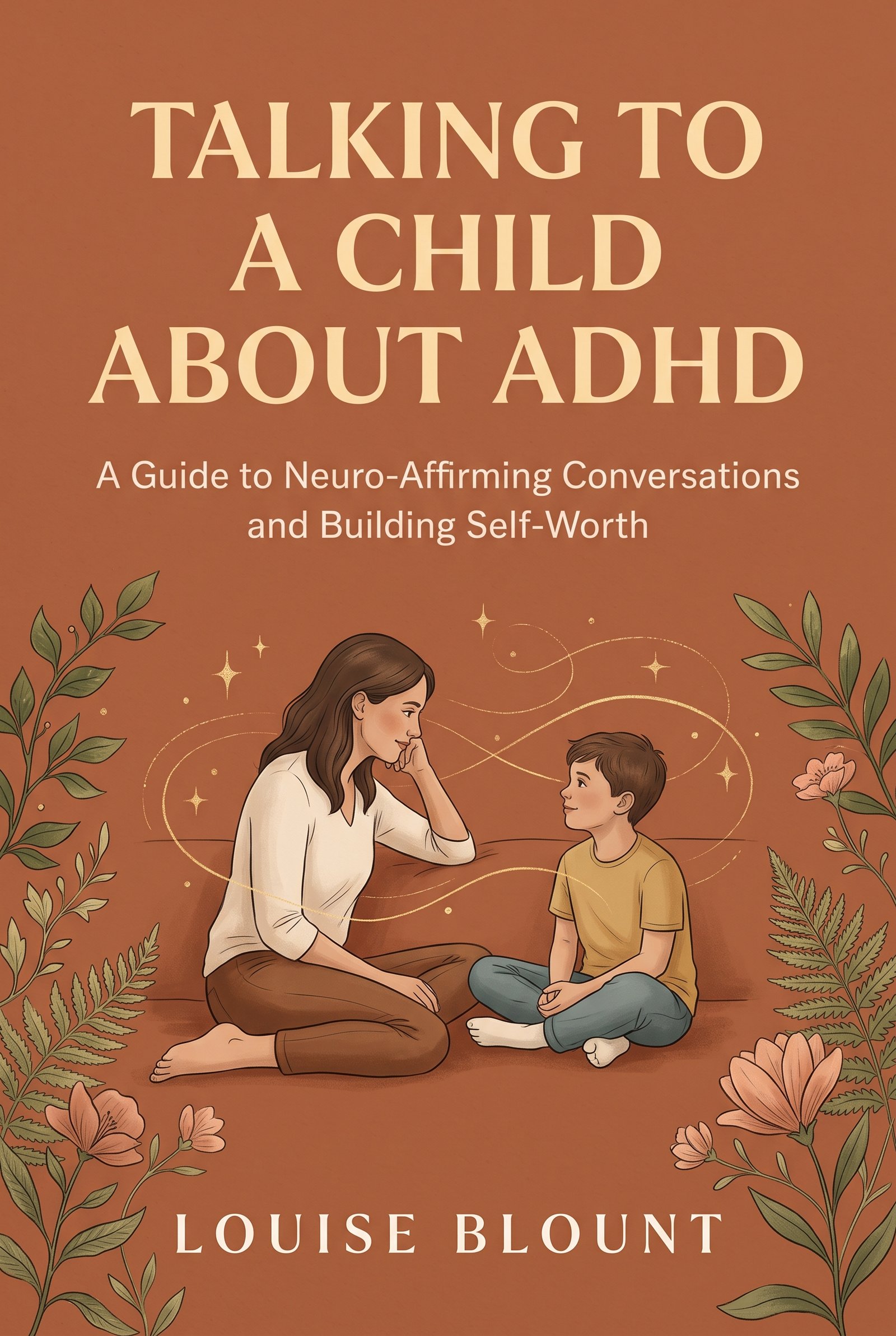
In Talking to a Child About ADHD Without Shame, author Louise Blount translates the latest clinical neuroscience into warm, empowering, and practical language that families can use immediately. Moving beyond outdated deficit models, this comprehensive guide shows you how to replace household friction and internalized shame with curiosity, self-advocacy, and emotional resilience.
Inside This Comprehensive Guide, You Will Discover:
- The Latest ADHD Neuroscience (Made Kid-Friendly): Understand and explain the Interest-Based Nervous System, tonic vs. phasic dopamine economics, the Default Mode Network (DMN) vs. Task-Positive Network (TPN) tug-of-war, and the 30% Executive Function Age Rule.
- Word-for-Word Age-Graded Scripts: Ready-to-use metaphors and conversation scripts tailored for Early Childhood (Ages 5–7), Middle Childhood & Tweens (Ages 8–11), and Adolescents (Ages 12–17).
- Navigating Rejection Sensitive Dysphoria (RSD): Learn how to spot the nervous-system flash flood of RSD and use co-regulation protocols to de-escalate meltdowns and shame spirals.
- Shame-Free Language Swaps: Practical tables showing how to pivot from character-blaming labels (“Why are you so lazy?”) to collaborative, brain-based troubleshooting (“Your task-starter gear is stuck—how can we add traction?”).
- Demystifying Medication & Support: How to frame therapy, school accommodations, and medication as supportive tools (“windshield wipers for a foggy brain”) rather than “behavior pills.”
- Pocket Scripts for the Real World: Equip your child—and yourself—with confident responses for peers, teachers, and skeptical relatives.
- Real-World Case Studies & Actionable Checklists: Every chapter includes clinical case studies and step-by-step To-Do lists to turn insight into daily family practice.
Whether your child was just diagnosed or has known about their ADHD for years, Talking to a Child About ADHD Without Shame is your essential roadmap to raising a self-aware, resilient, and thriving neurodivergent child.


Reviews
There are no reviews yet.