When someone you care about has breast cancer, finding the words can feel difficult.
You may worry about saying the wrong thing, asking too many questions, or offering reassurance that does not help. You do not need a perfect speech. You need a thoughtful way to listen, respect their choices, and offer support they can actually use.
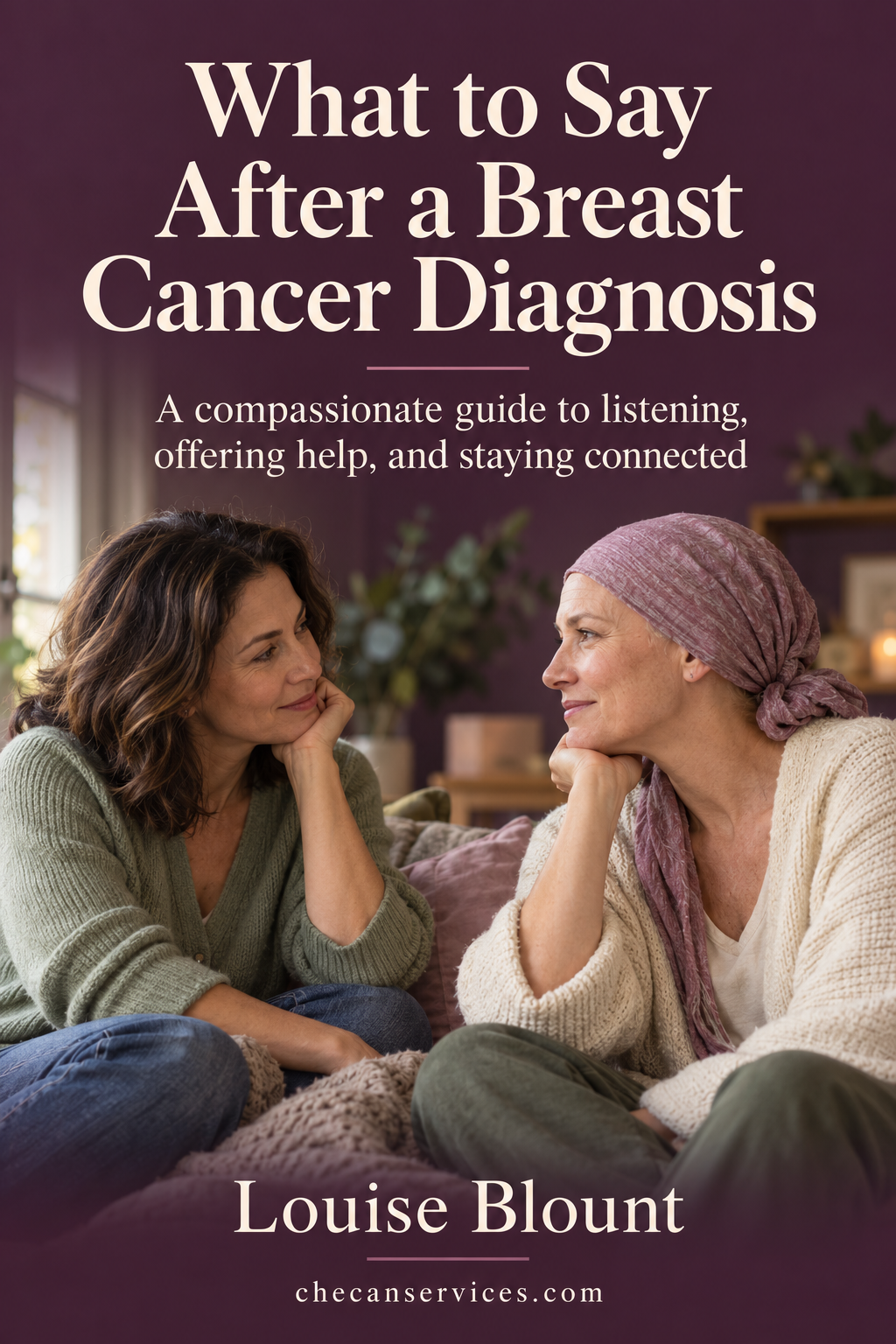
What to Say After a Breast Cancer Diagnosis by Louise Blount is a compassionate, practical guide for friends, partners, relatives, and colleagues who want to stay connected through difficult conversations and changing needs.
Inside, you will discover how to:
-
- Respond to the diagnosis with warmth and honesty.
- Listen without rushing to fix feelings or promise an outcome.
- Replace unhelpful reassurance with thoughtful, supportive language.
- Offer specific help with meals, transport, childcare, and everyday tasks.
- Support a partner while respecting their independence and boundaries.
- Talk with children and family members in clear, age-appropriate ways.
- Help at appointments while keeping the person’s own voice central.
- Write messages that protect privacy and do not demand a reply.
- Stay present when news is uncertain or difficult.
- Continue offering support as treatment and circumstances change.
Practical guidance you can return to
Ten chapters combine conversation examples, ten clearly labelled fictional case studies, practical checklists, and space for reflection. Referenced guidance and research checked through October 2026 provide context, with research limitations explained.
Whether you are preparing for a first conversation or wondering how to keep showing up months later, this ebook offers a gentle starting point: listen carefully, ask what matters, and make room for the person’s own experience.
Format: PDF ebook. Each chapter begins on a new page.
This ebook provides educational communication guidance. It does not replace medical advice, mental health care, or an individual treatment plan.


Reviews
There are no reviews yet.