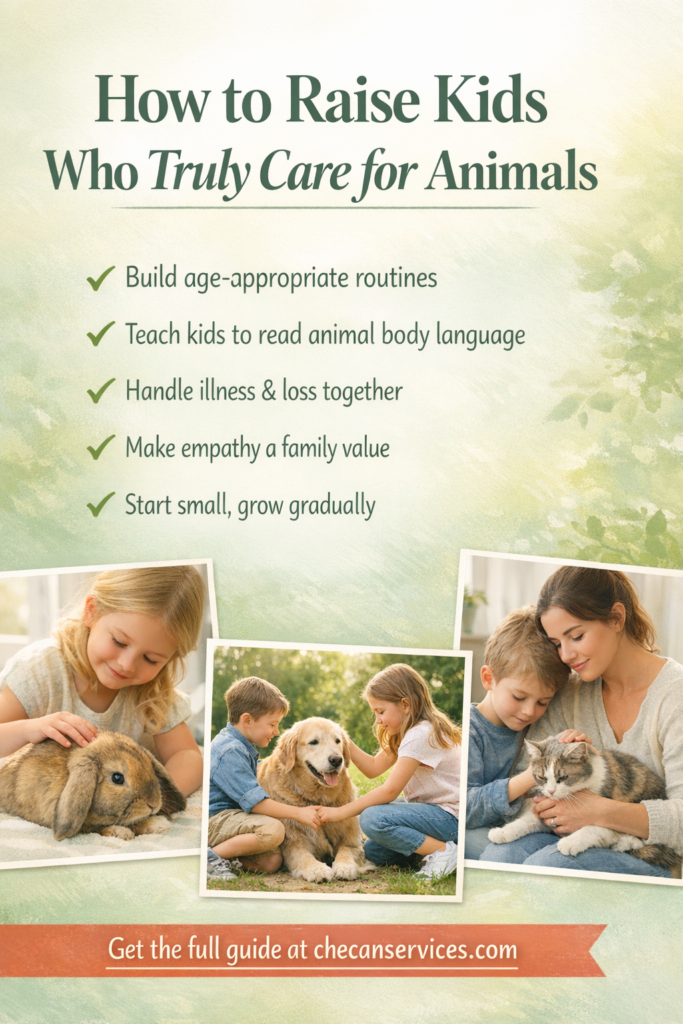
Every child lights up around animals. Whether it’s a wagging tail at the front door or a hamster spinning on its wheel, pets have a magical way of capturing a kid’s heart. But here’s the thing — loving an animal and knowing how to care for one are two very different skills. And the gap between them is where real growth happens.
If you’ve ever wondered how to turn your child’s excitement about pets into genuine, lasting responsibility, you’re not alone. Teaching kids to be thoughtful animal caretakers isn’t just about chore charts and feeding schedules. It’s about building empathy, patience, and confidence — qualities that serve them well beyond the pet bowl.
Why Pet Care Is One of the Best Life Lessons
Think about what responsible pet ownership actually requires. A child has to notice when something is “off” with their animal. They have to stick to routines even when they don’t feel like it. They learn that another living being depends on them — and that’s a powerful realization for a young mind.
Research consistently shows that children who grow up caring for animals develop stronger emotional intelligence. They become better at reading nonverbal cues, managing frustration, and showing compassion. These aren’t small wins. These are foundational life skills wrapped in fur and feathers.
The key is approaching pet care not as a burden you assign, but as a shared adventure you guide. When kids feel like partners in the process rather than task-completers, everything shifts.
How to Build Daily Routines That Stick
One of the biggest mistakes parents make is handing over full responsibility too quickly. A five-year-old can help scoop kibble, but they shouldn’t be solely responsible for remembering meal times. Age-appropriate involvement is everything.
Start small. Let toddlers help brush the dog or fill the water dish with supervision. Elementary-aged kids can take on feeding schedules and basic grooming. Teens can manage vet appointment reminders and exercise routines. The idea is gradual ownership — each year, they take on a little more.
Visual checklists work wonders for younger children. A simple chart on the fridge with pictures of each task gives them autonomy without overwhelming them. And when they complete their responsibilities consistently, acknowledge it. Not with treats or rewards, but with genuine recognition: “Our dog looks so happy and healthy because of the care you give him.”
For a deeper, step-by-step framework on building these routines at every age, Pet Smart: Raising Kids to Be Thoughtful Animal Caretakers offers practical guidance that makes the process feel natural and enjoyable.
How to Teach Kids to Read Animal Behavior
This is where things get really interesting — and really important. Most kids assume their pet is always happy, but animals communicate stress, fear, and discomfort in subtle ways. A tucked tail, flattened ears, a cat’s slow blink versus a hard stare — these signals mean something.
Teaching children to observe before they interact transforms the relationship. Instead of rushing in for a hug, they learn to pause and ask, “Is my pet in the mood for this right now?” That simple question builds respect for boundaries — not just with animals, but with people too.
You can make this a game. Sit with your child and watch your pet together. Ask questions like, “What do you think she’s feeling right now? How can you tell?” Over time, they’ll develop an instinct for reading body language that most adults never learn.
How to Handle the Hard Moments Together
Pet ownership isn’t all cuddles and playtime. Animals get sick. They age. Sometimes, they pass away. These moments are painful, but they’re also profoundly important for a child’s emotional development.
The instinct is to shield kids from sadness, but doing so can actually make things harder. When a pet is ill, involve your child in an age-appropriate way. Let them help prepare a comfortable resting spot. Explain what’s happening in simple, honest terms. Show them that caring for someone means showing up during the difficult times, not just the fun ones.
Grief, when handled with openness and support, teaches children that love and loss are connected — and that both are okay to feel. It’s one of the most meaningful lessons a pet can offer.
How to Make Empathy a Family Value
Ultimately, raising a child who cares well for animals is about creating a household culture of empathy. It shows up in how you talk about your pets, how you respond when your child is rough or impatient, and how you model gentle interaction yourself.
Kids mirror what they see. If you take time to sit quietly with your cat, your child notices. If you speak softly to a nervous dog, your child absorbs that approach. Empathy isn’t taught through lectures — it’s caught through everyday moments.
When families approach pet care as a shared responsibility rooted in compassion rather than obligation, something beautiful happens. Children don’t just learn to take care of animals. They learn to take care of the world around them.
If you’re looking for a comprehensive, heartfelt guide to walk you through this journey, Pet Smart: Raising Kids to Be Thoughtful Animal Caretakers is packed with real-life examples, chapter-by-chapter strategies, and age-appropriate tips that make the process rewarding for the whole family.