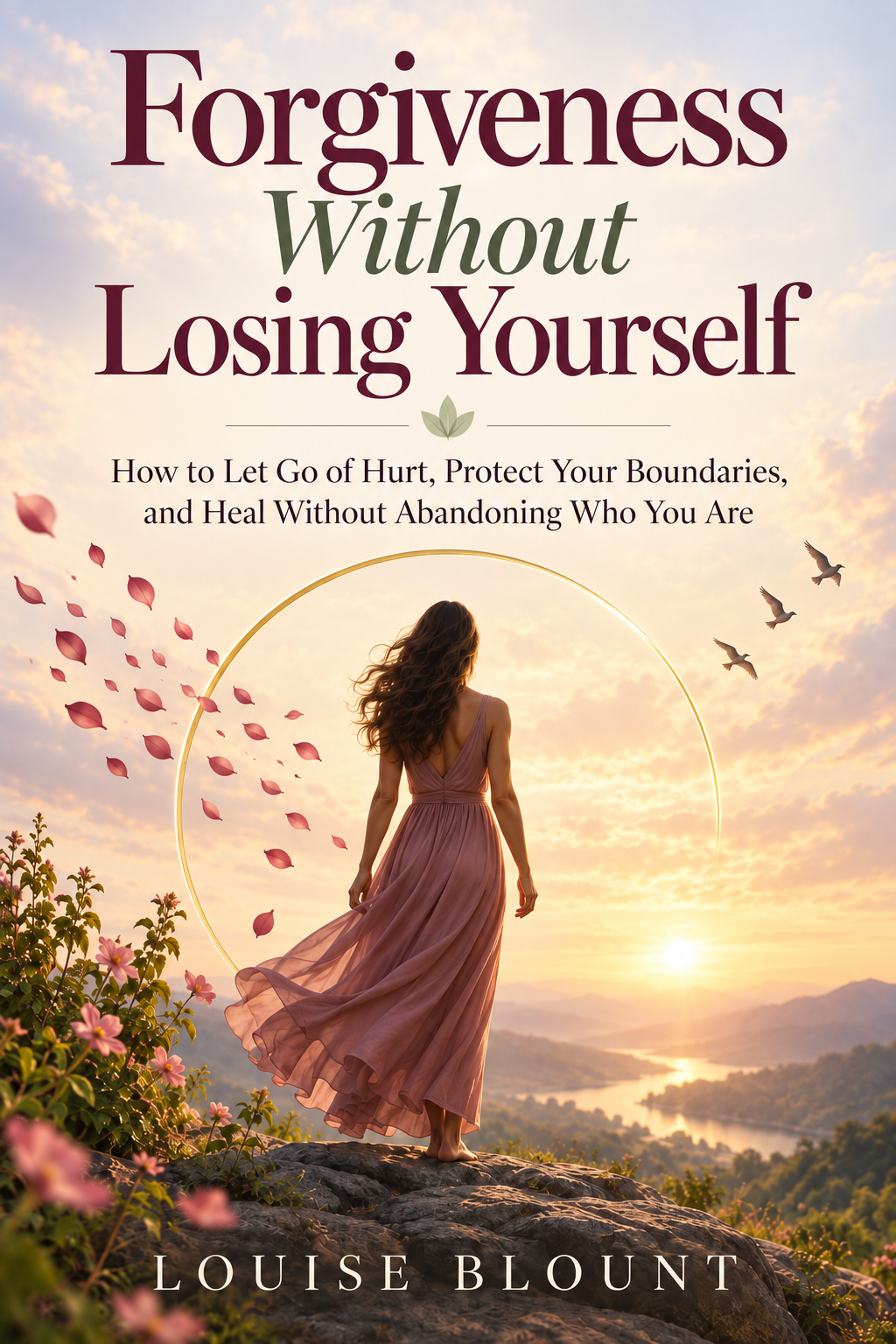
What if forgiveness could help you heal without requiring you to forget what happened, restore a broken relationship, or sacrifice your own boundaries?
Forgiveness Without Losing Yourself by Louise Blount offers a thoughtful, practical approach to one of the most misunderstood parts of emotional healing.
Forgiveness is often presented as something we owe other people. We may be told to move on, stop being angry, give someone another chance, or behave as though the hurt never happened. But genuine forgiveness does not have to mean reconciliation, restored trust, unlimited access, or the removal of consequences.
This research-informed guide explores how forgiveness can become an act of personal freedom rather than self-abandonment.
Inside This Book
- Understand what forgiveness really means—and what it does not mean.
- Learn the difference between forgiveness, reconciliation, trust, and access.
- Explore why resentment can become emotionally exhausting over time.
- Discover how healthy boundaries can exist alongside forgiveness.
- Learn why forgiving someone does not require allowing harmful behavior to continue.
- Recognize the difference between compassion and excusing wrongdoing.
- Explore healthier ways to process anger, disappointment, betrayal, and grief.
- Learn how accountability fits into genuine relationship repair.
- Understand when reconciliation may be appropriate—and when distance may be healthier.
- Develop a more compassionate approach to forgiving yourself.
Forgiveness Without Self-Abandonment
Healing does not require pretending that something did not hurt. It does not require denying your anger, minimizing betrayal, or reopening a relationship that no longer feels safe.
You can release resentment while remembering what you learned. You can feel compassion while maintaining distance. You can forgive someone without trusting them again. And you can move forward without giving up the values and boundaries that protect your well-being.
Forgiveness Without Losing Yourself brings together psychological research, practical reflection, emotional insight, and boundary-focused guidance to help readers approach forgiveness with greater clarity.
A Healthier Definition of Letting Go
The goal is not to become unaffected by the past. The goal is to prevent the past from controlling the future.
Whether you are recovering from betrayal, disappointment, conflict, family difficulties, friendship breakdowns, relationship wounds, or regrets of your own, this book offers a compassionate framework for moving forward without losing yourself in the process.
You are allowed to heal and still have boundaries.
You are allowed to forgive and still say no.
You are allowed to let go without letting someone back in.
Written by Louise Blount, this accessible guide is designed for readers seeking greater emotional peace, stronger boundaries, healthier relationships, and a more balanced understanding of forgiveness.


Reviews
There are no reviews yet.